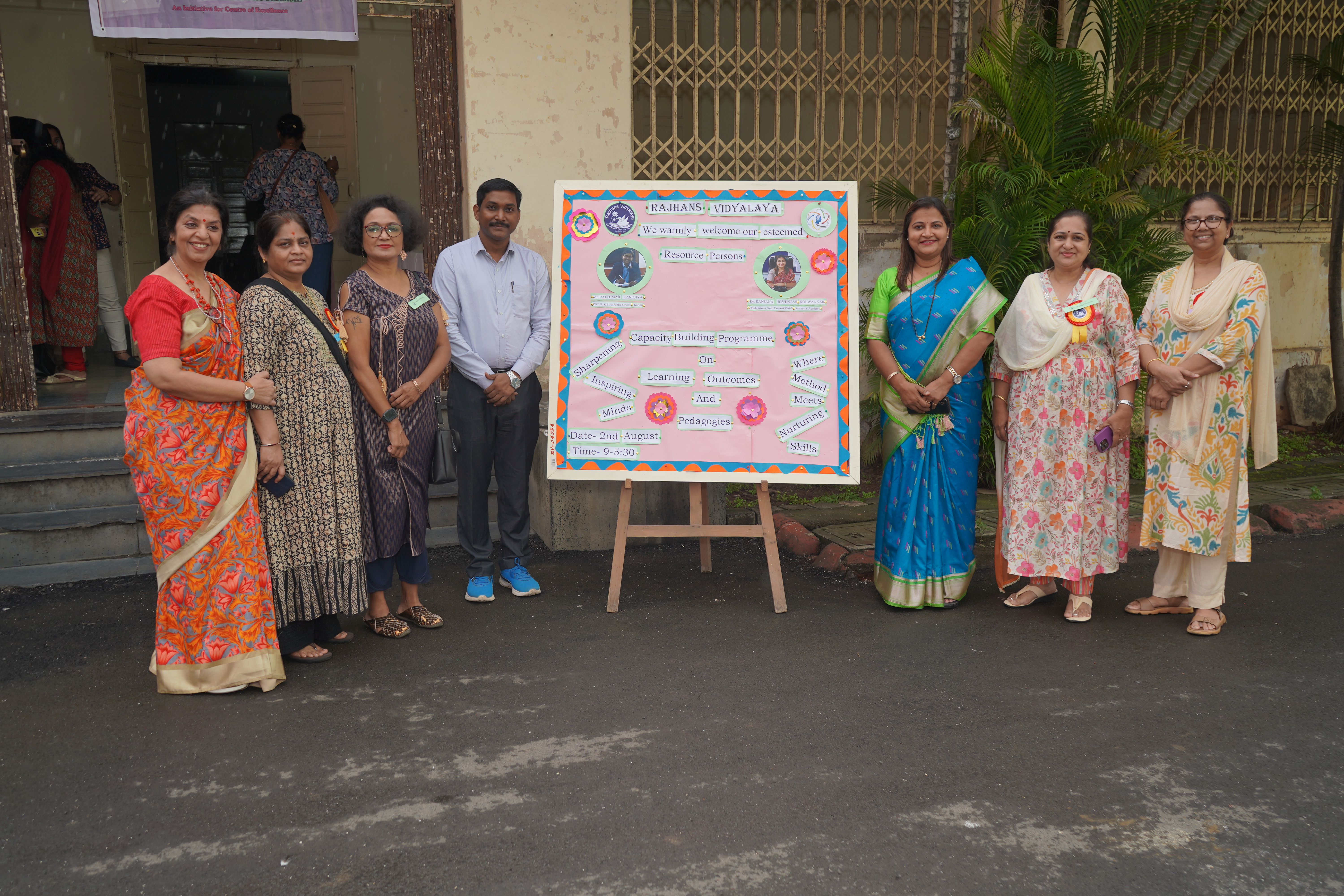
CAPACITY BUILDING PROGRAMME ON LEARNING OUTCOMES AND PEDAGOGIES – 2ND AUGUST, 2025

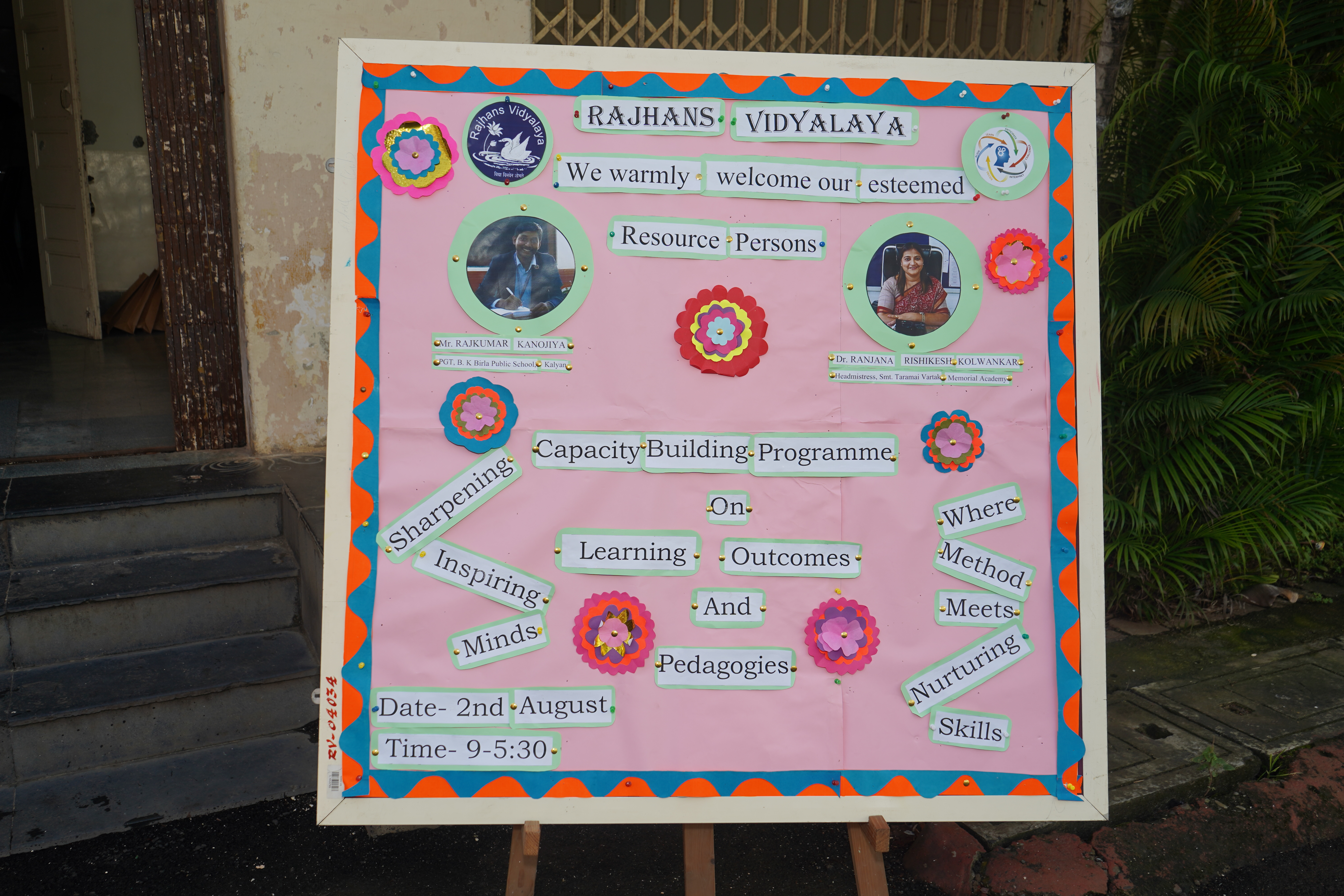
CAPACITY BUILDING PROGRAMME ON LEARNING OUTCOMES AND PEDAGOGIES – 2ND AUGUST, 2025
"I never teach my pupils; I only attempt to provide the conditions in which they can learn." - Albert Einstein
This quote from Albert Einstein truly summarizes the approach of 21st century learning developments, where teacher is in a role of facilitator rather than teacher.
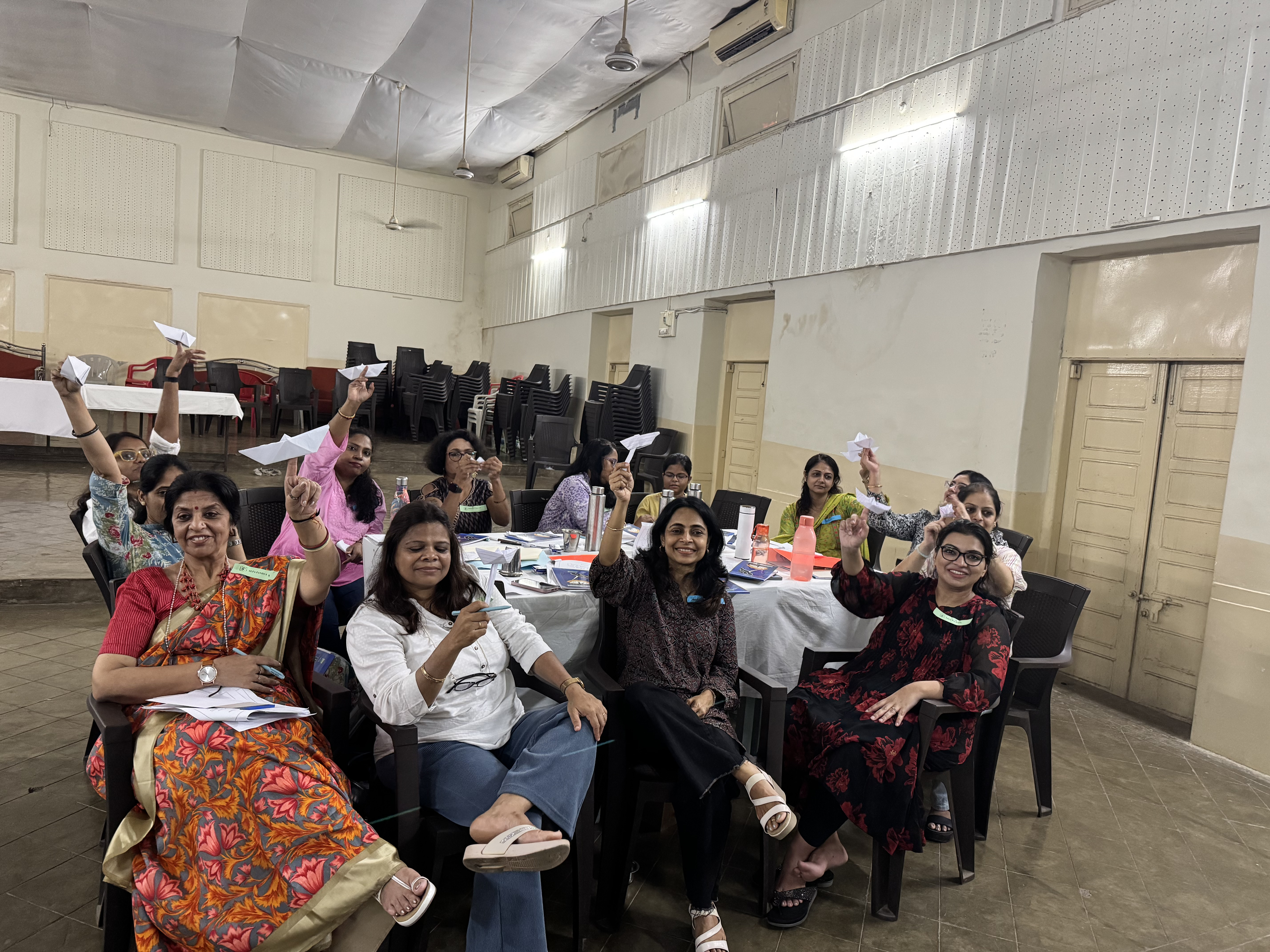
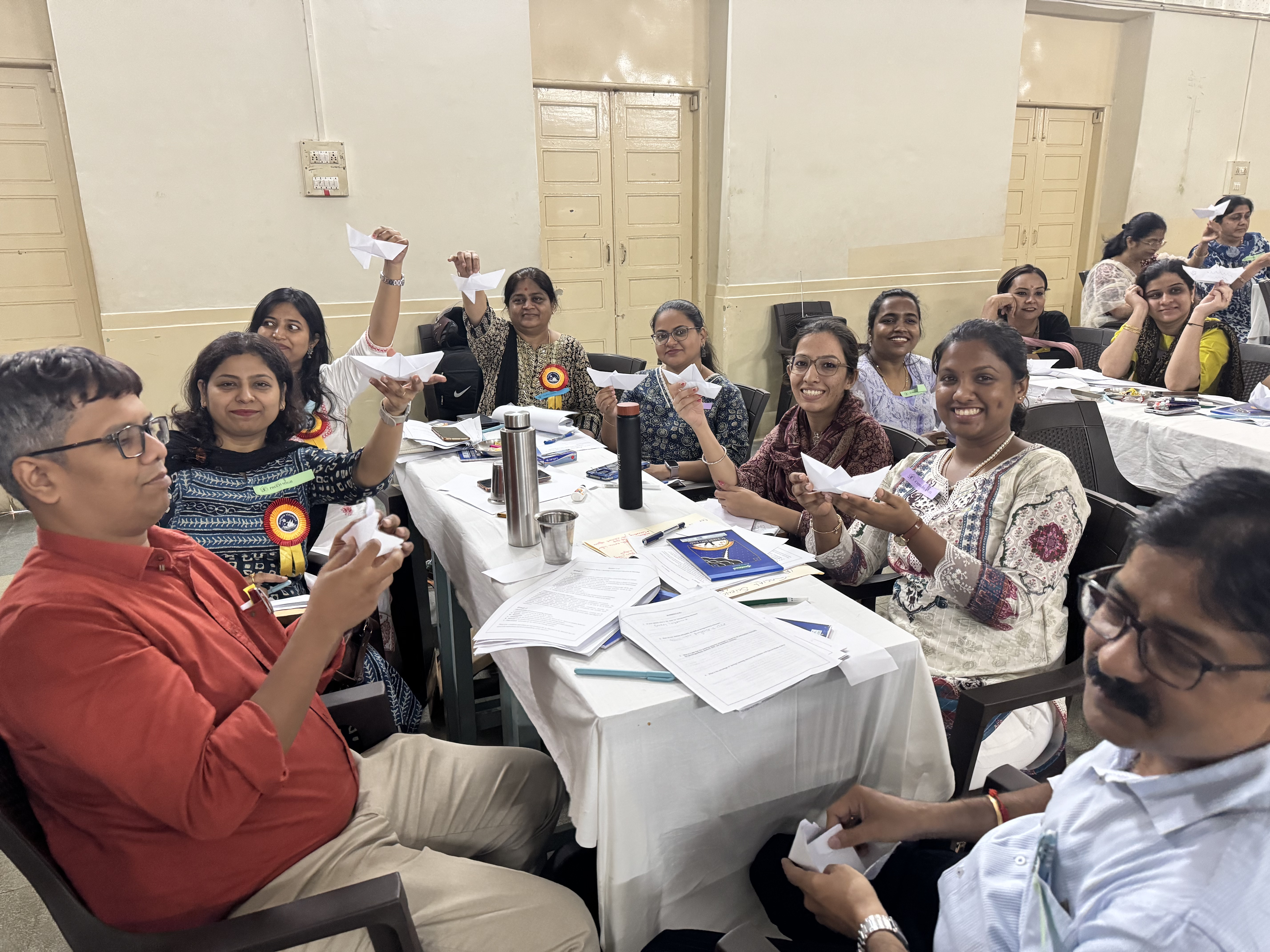
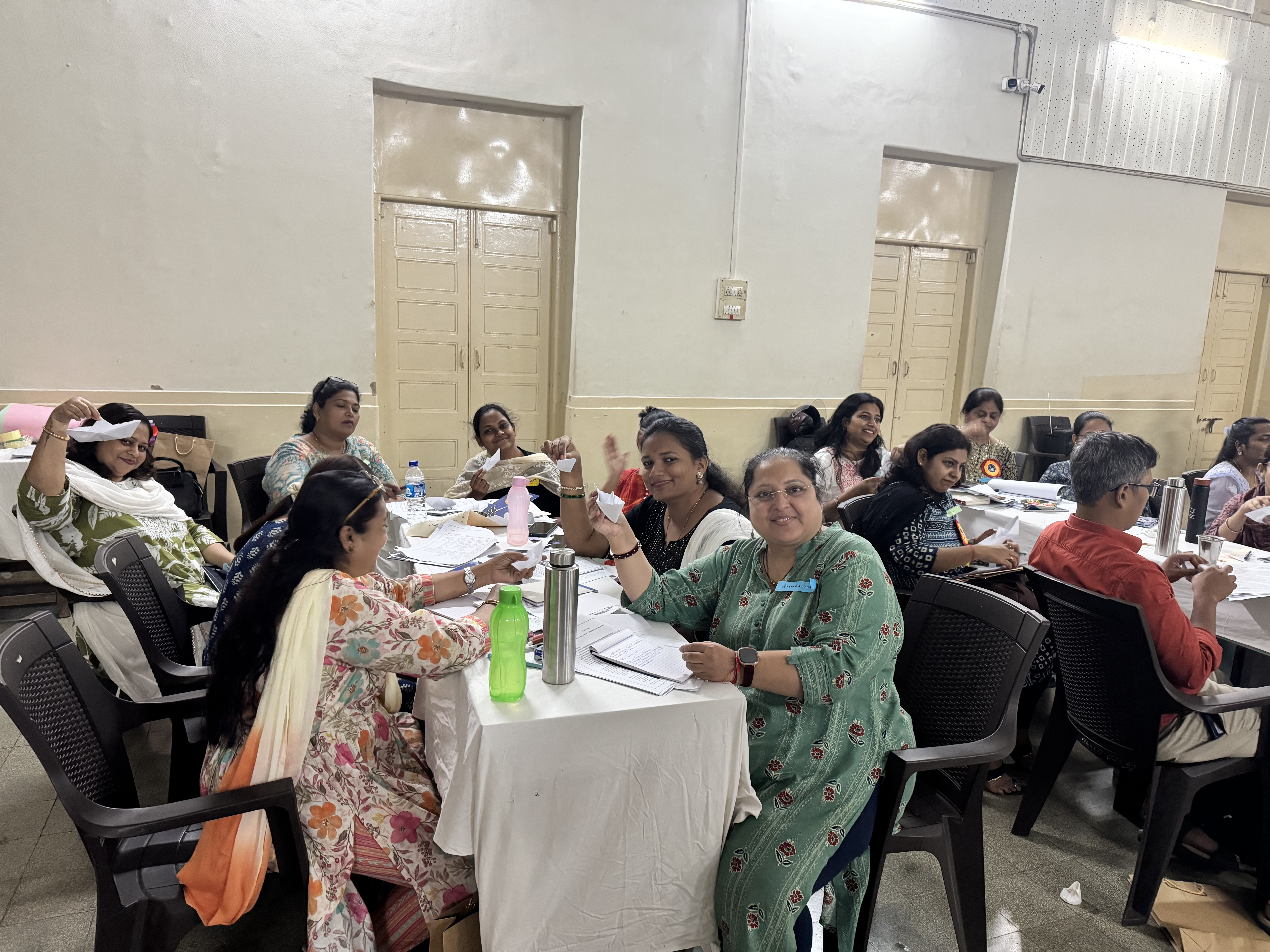
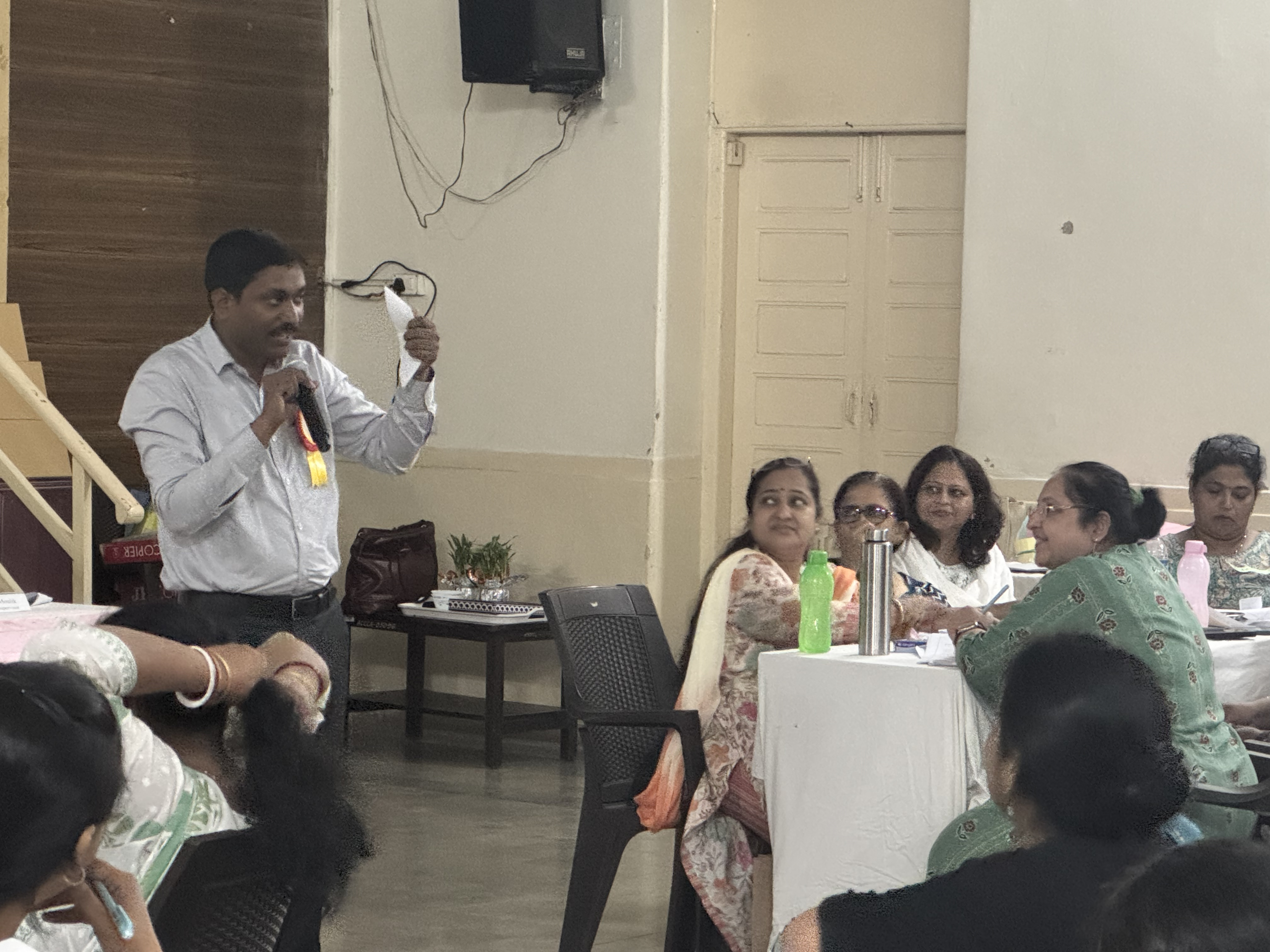
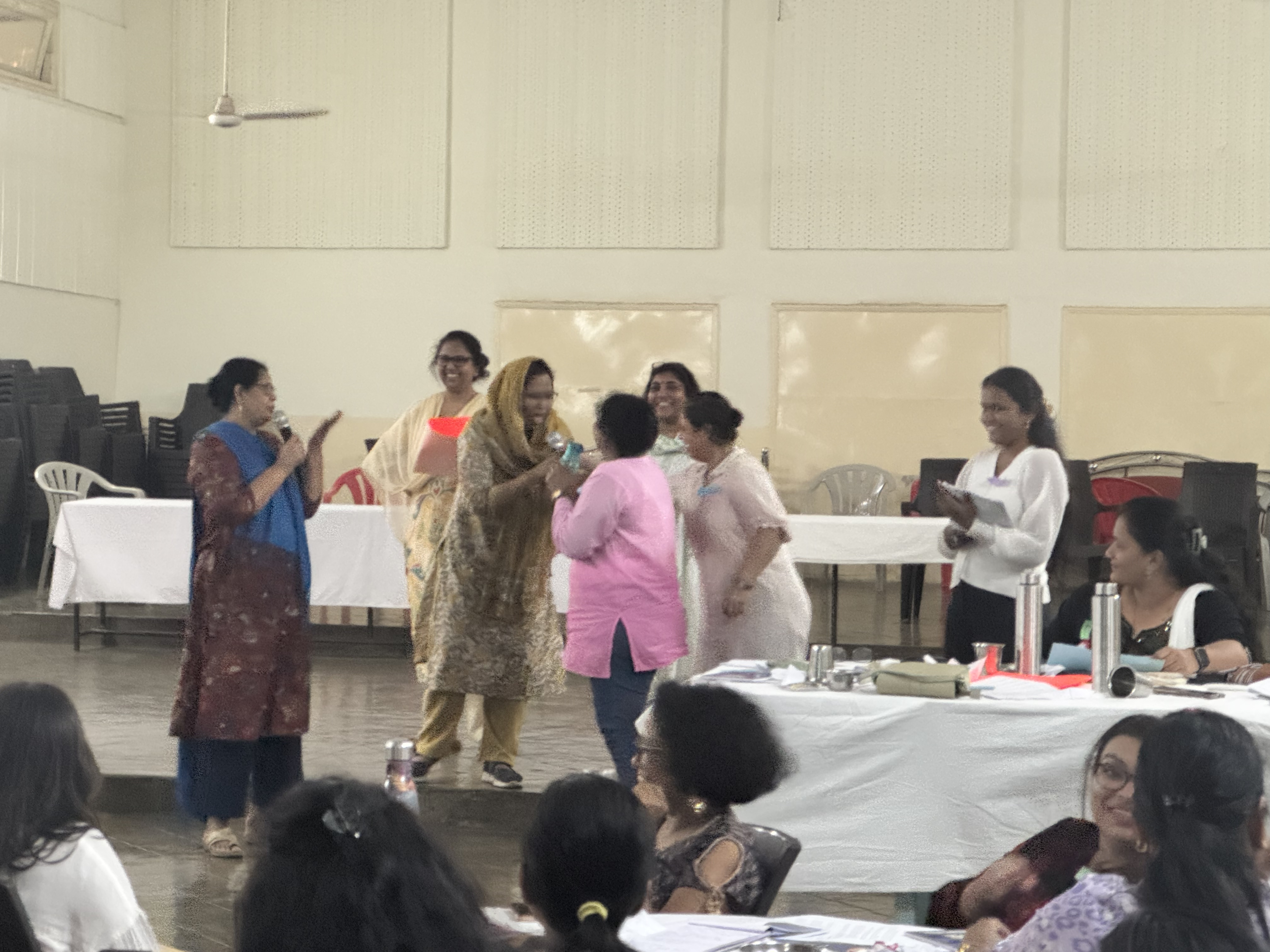
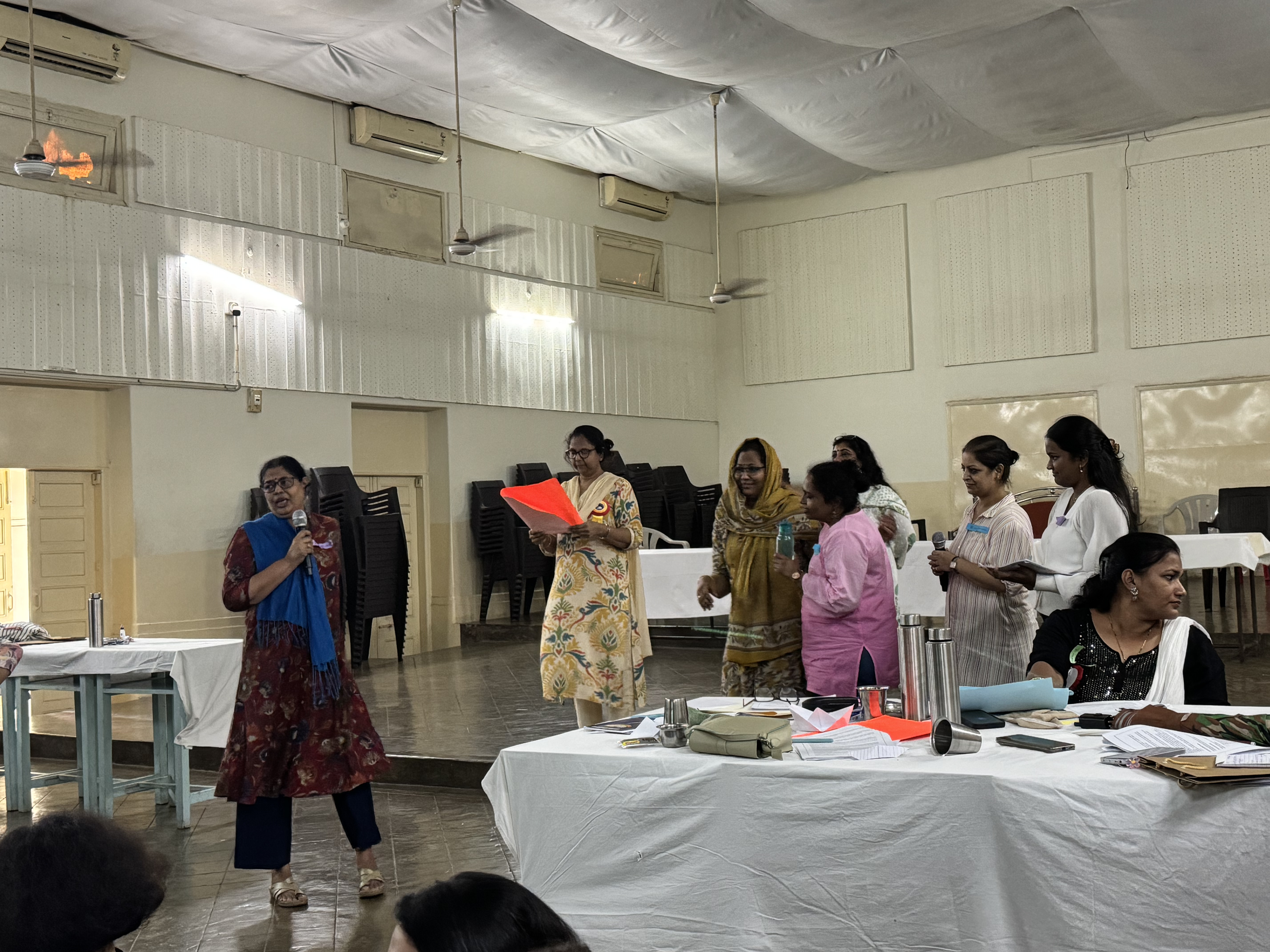
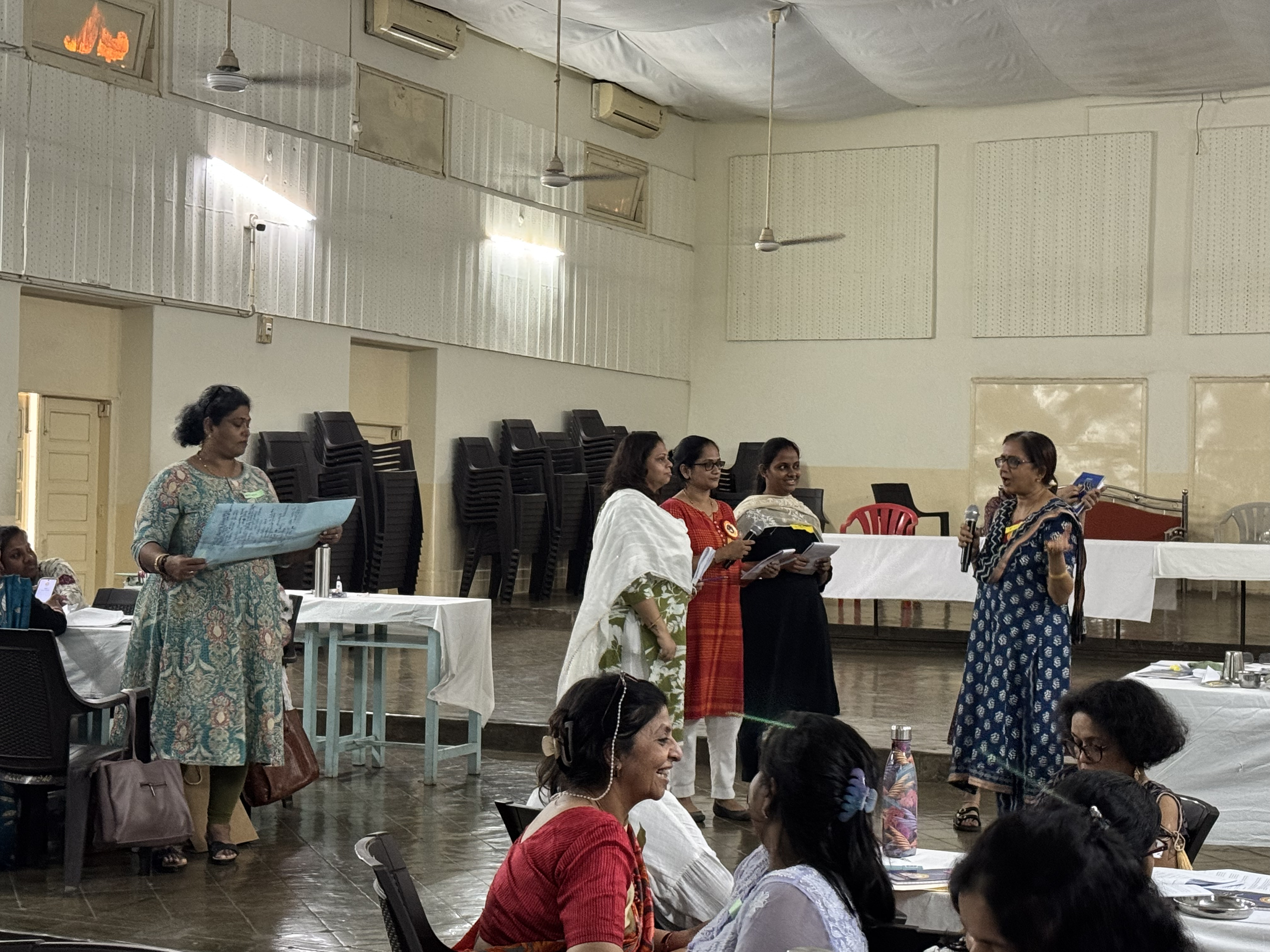
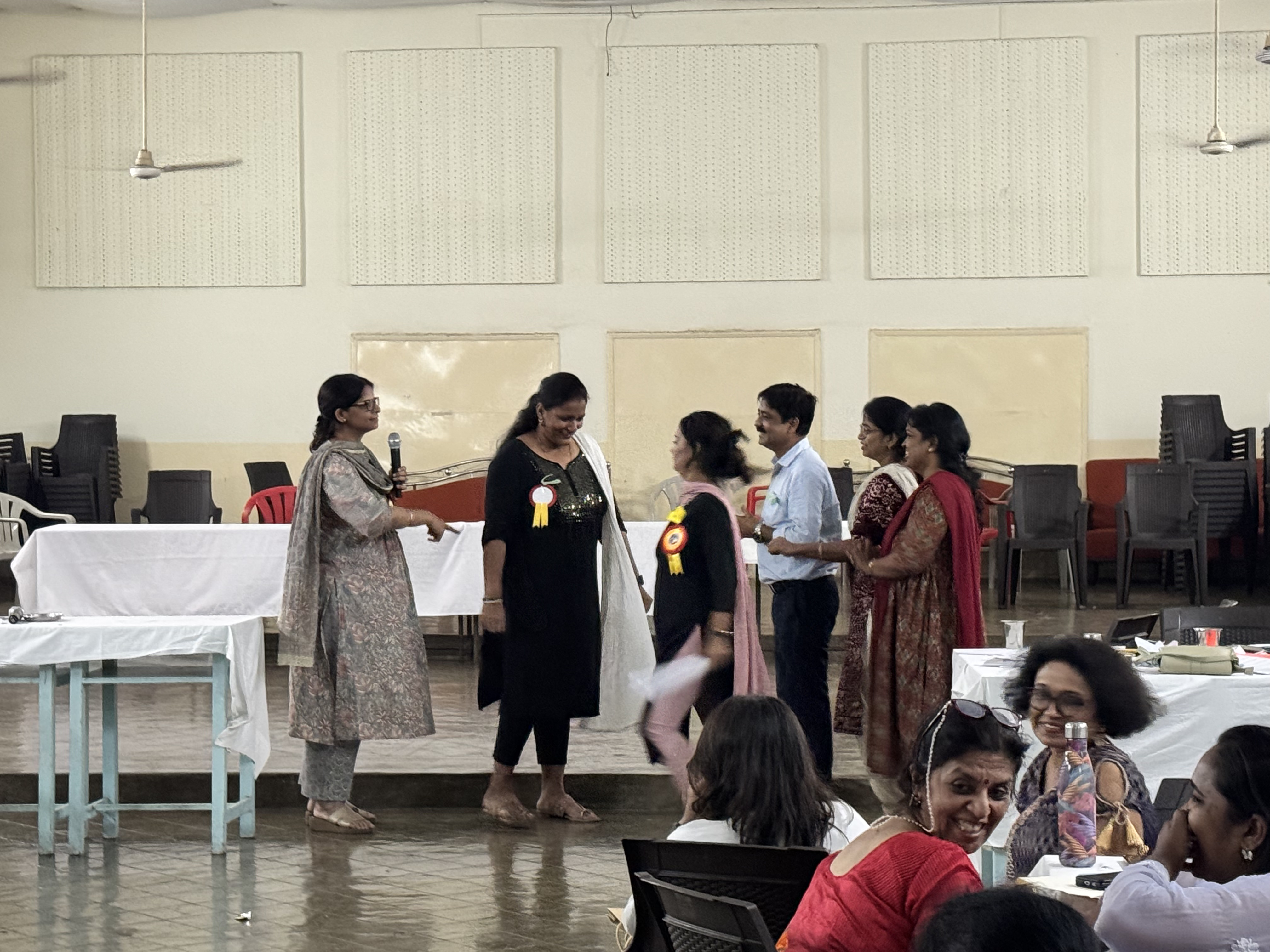
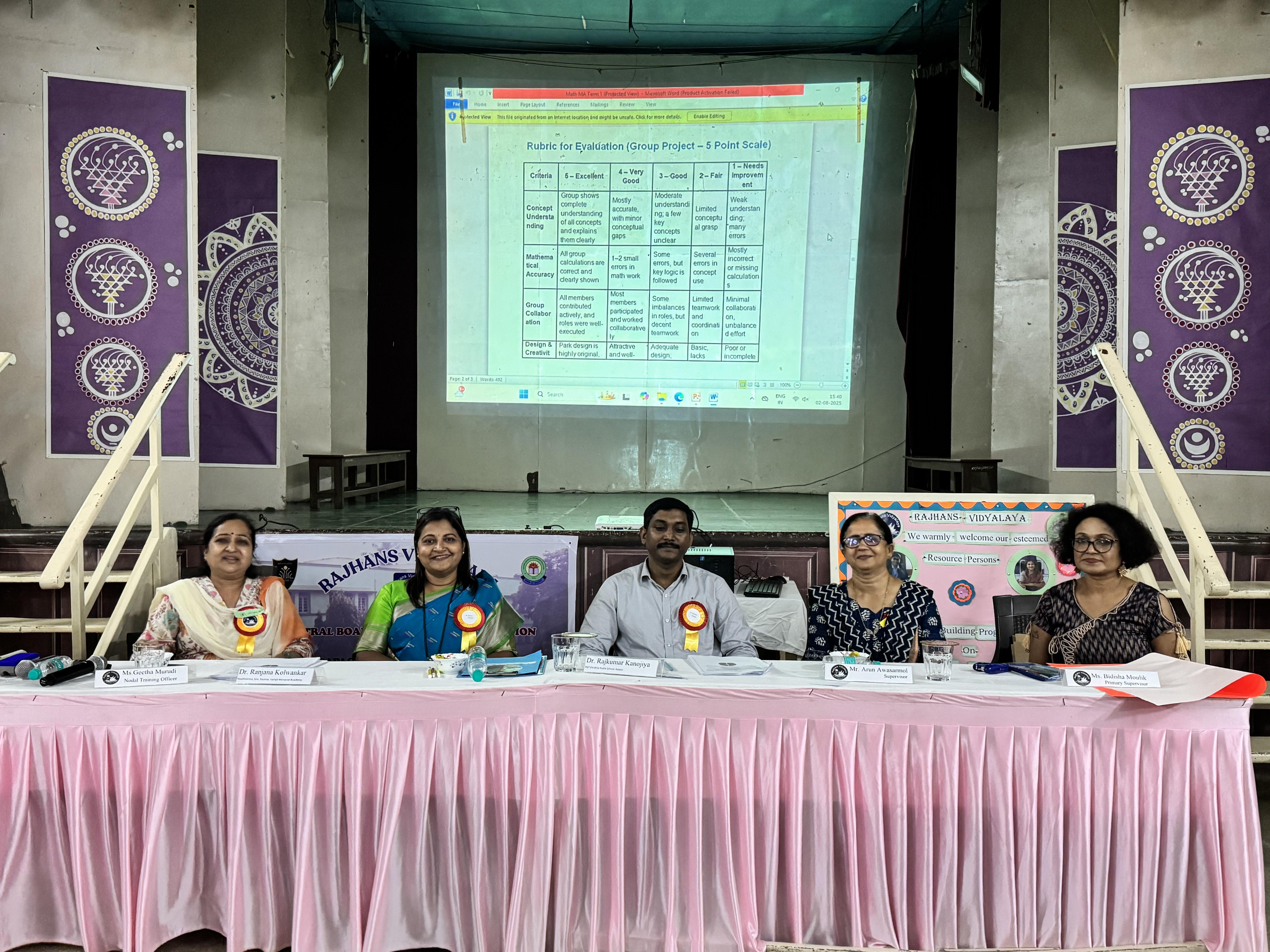
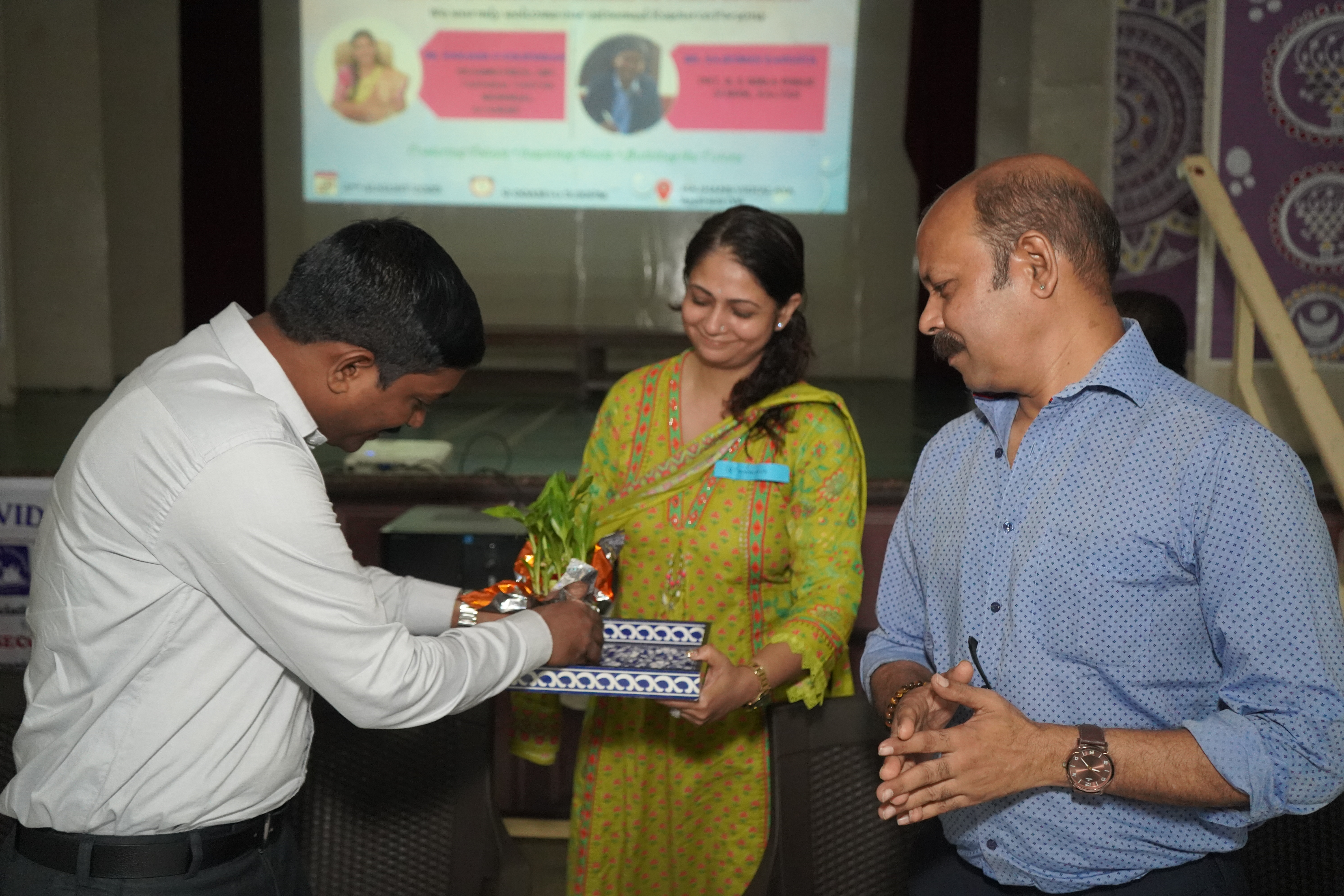
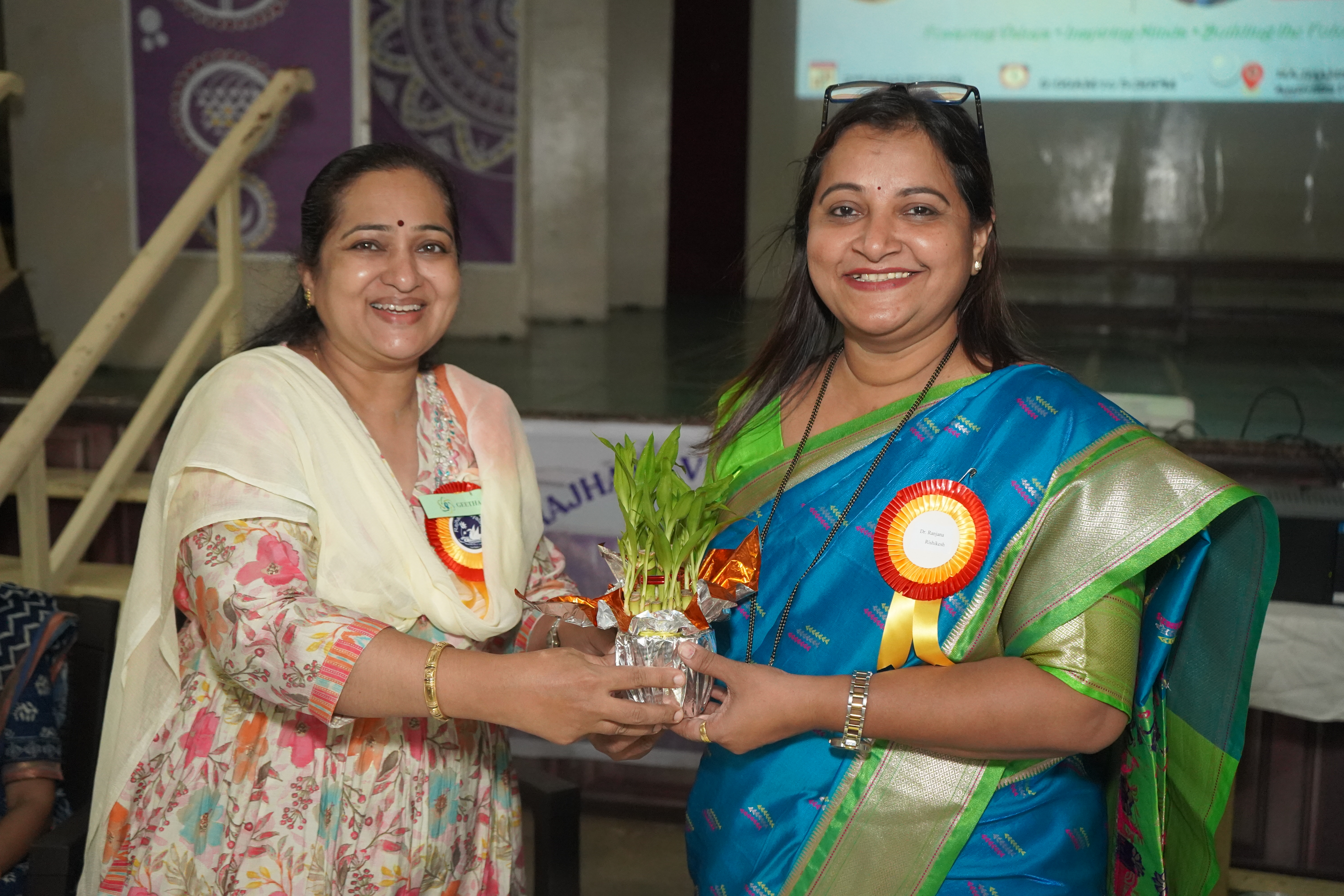
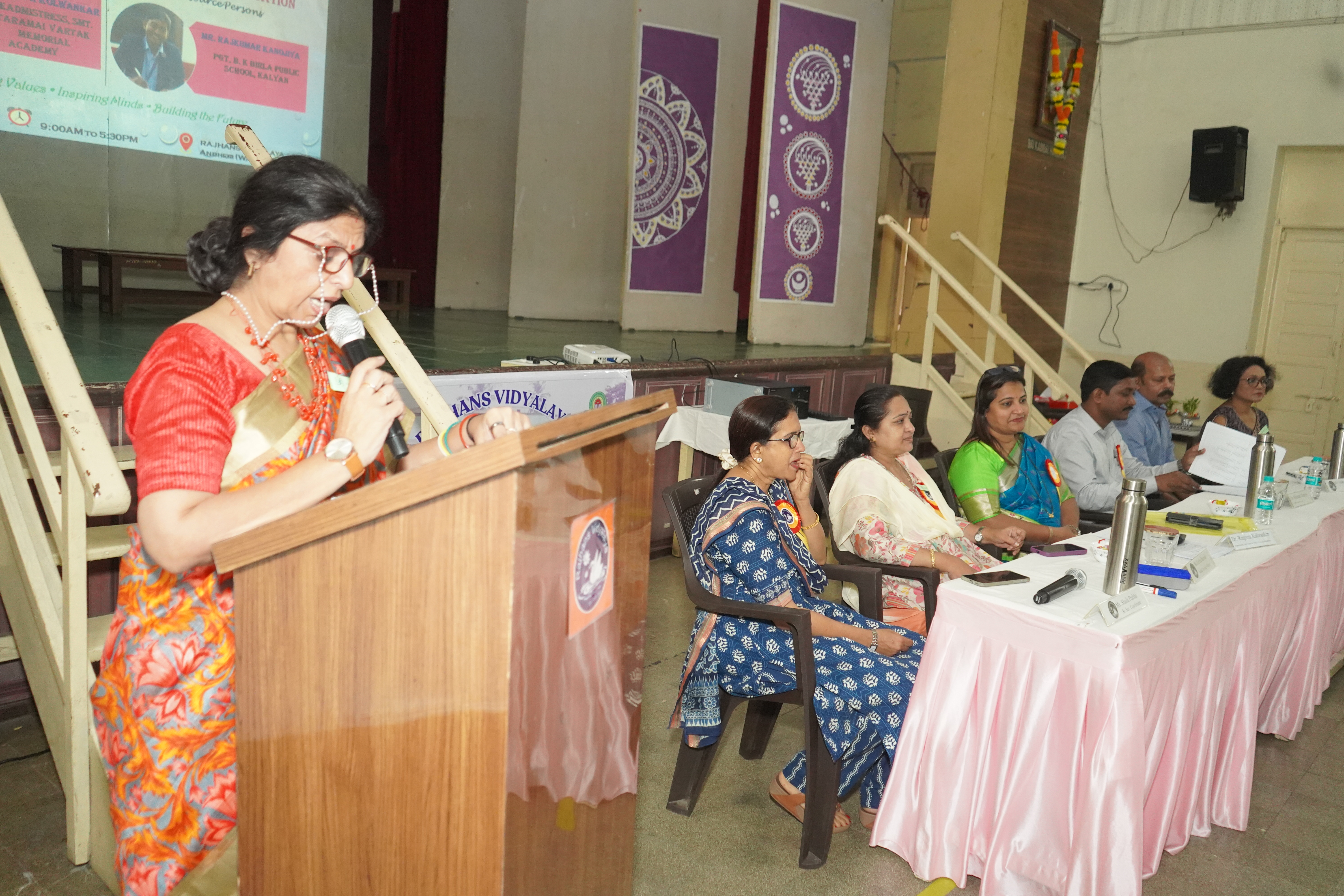
The CBSE Capacity Building Programme on Learning Outcomes and Pedagogies was conducted at Rajhans Vidyalaya, Theatre Hall, on 2nd August, 2025 from 9:00 a.m. to 4:00 p.m. under the guidance of two esteemed resource persons — Dr. Ranjana Kolwankar and Dr. Rajkumar Kanojiya. It was a day-long professional development workshop conducted to explore effective teaching strategies and their impact on learning outcomes. The session focused on the critical link between how we teach (pedagogy) and what students achieve (learning outcomes).The workshop aimed to understand different approaches towards teaching – learning methods used in the class. It was truly an interactive session that included variety of activities.
Activity 1: Blind Gestures and Missing Communication In this exercise, participants were blindfolded and given instructions using gestures only. This activity highlighted the crucial role of clear, multi-modal communication. Missing instructions led to frustration and incorrect outcomes, underscoring that effective pedagogy requires more than just a single method of delivery. Case studies and real classroom issues were examined to explore how values could be applied in difficult or sensitive situations. The resource persons stressed that inculcating values is the teacher’s responsibility, and educators must model them consistently. Through open discussions, it was highlighted that values can differ based on individual perspectives, and educators need to be sensitive to these diverse views while ensuring the core values are respected.
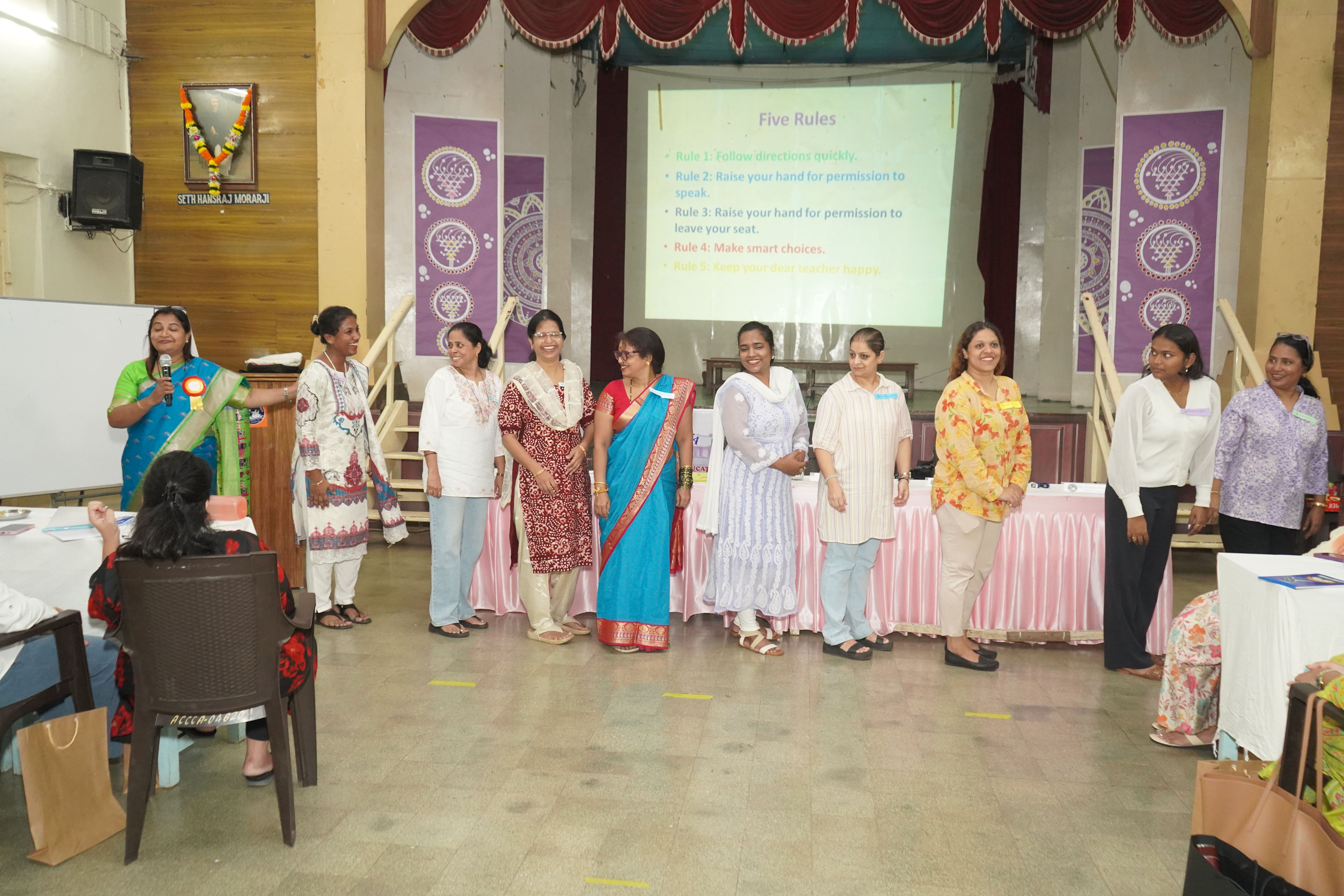
Activity 2: The Power of Simple Instructions The second activity involved giving short, simple, and clear verbal instructions. The five key rules were:
- Be concise.
- Use simple language.
- Break down complex tasks.
- Follow a logical pattern.
- Check for understanding. The group found that clarity and a predictable pattern significantly improved the learning process, demonstrating that pedagogical methods must be systematic to be successful.
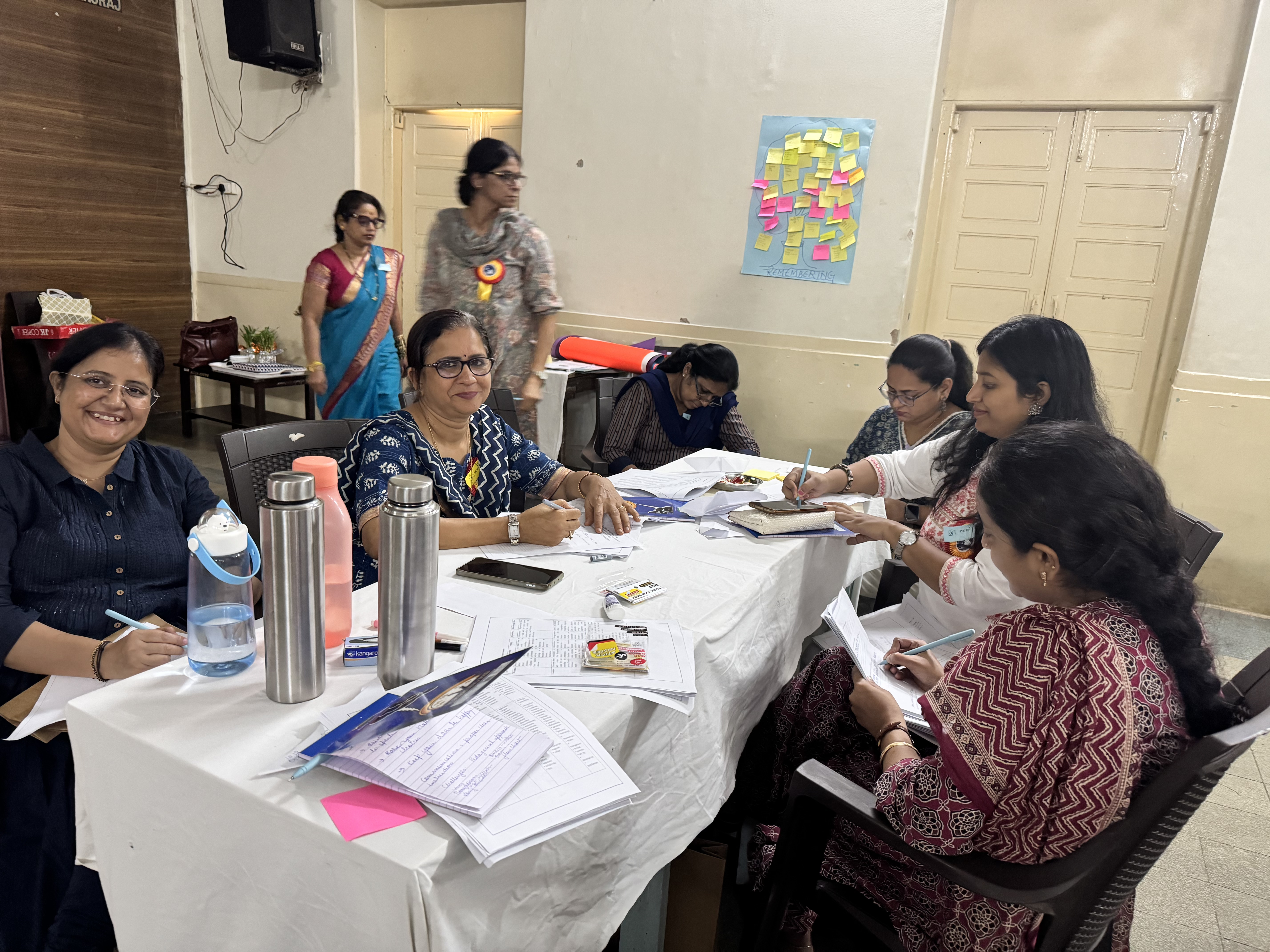
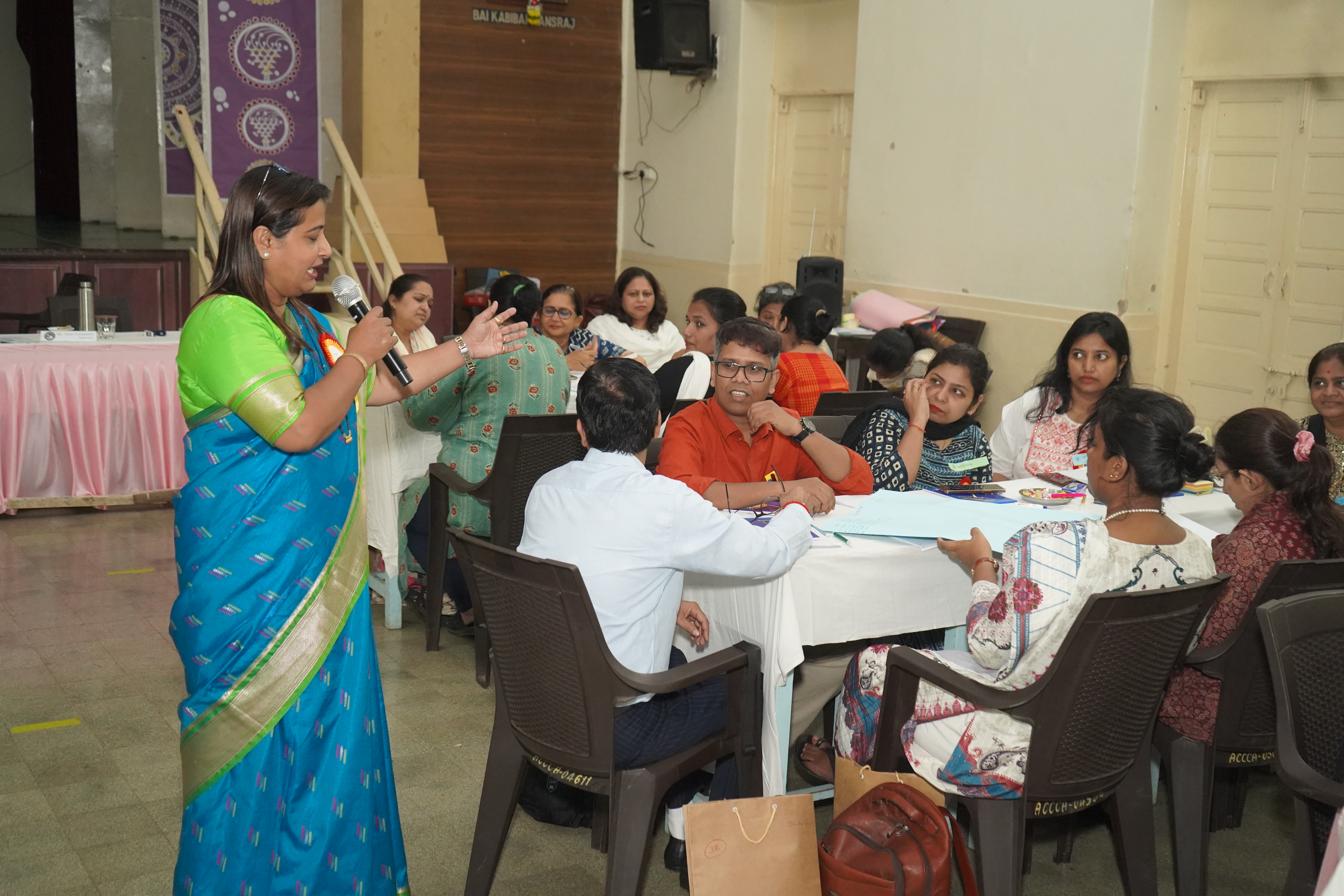
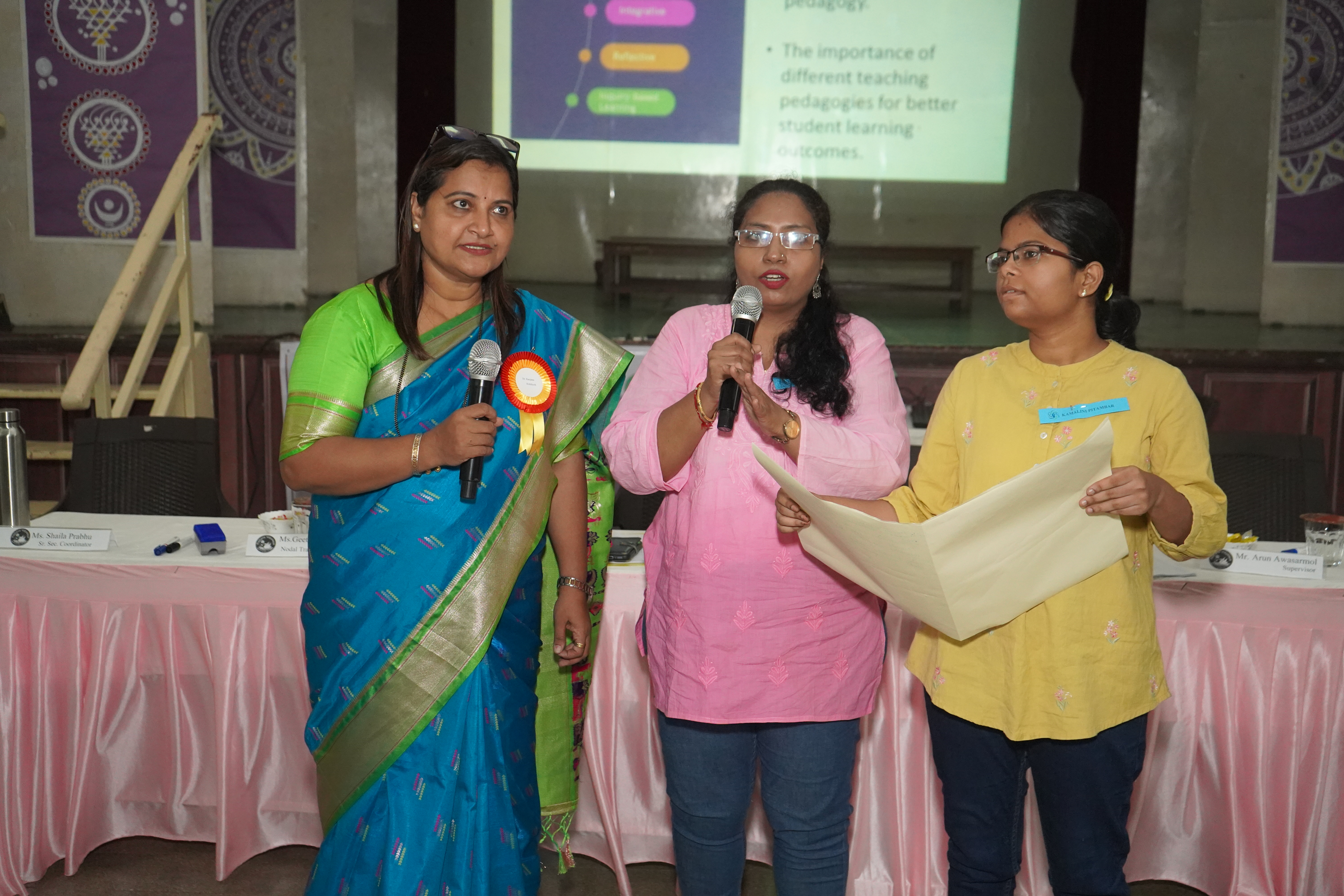
Activity 3: Collaborative Problem-Solving Teachers from different subjects shared their unique pedagogical challenges. A key takeaway was the importance of the Concrete-Pictorial-Abstract (CPA) method, where complex concepts are introduced through hands-on, tangible experiences before moving to visual representations and finally to abstract symbols. Teachers also emphasized the value of connecting subjects to real-world career opportunities to make learning relevant.
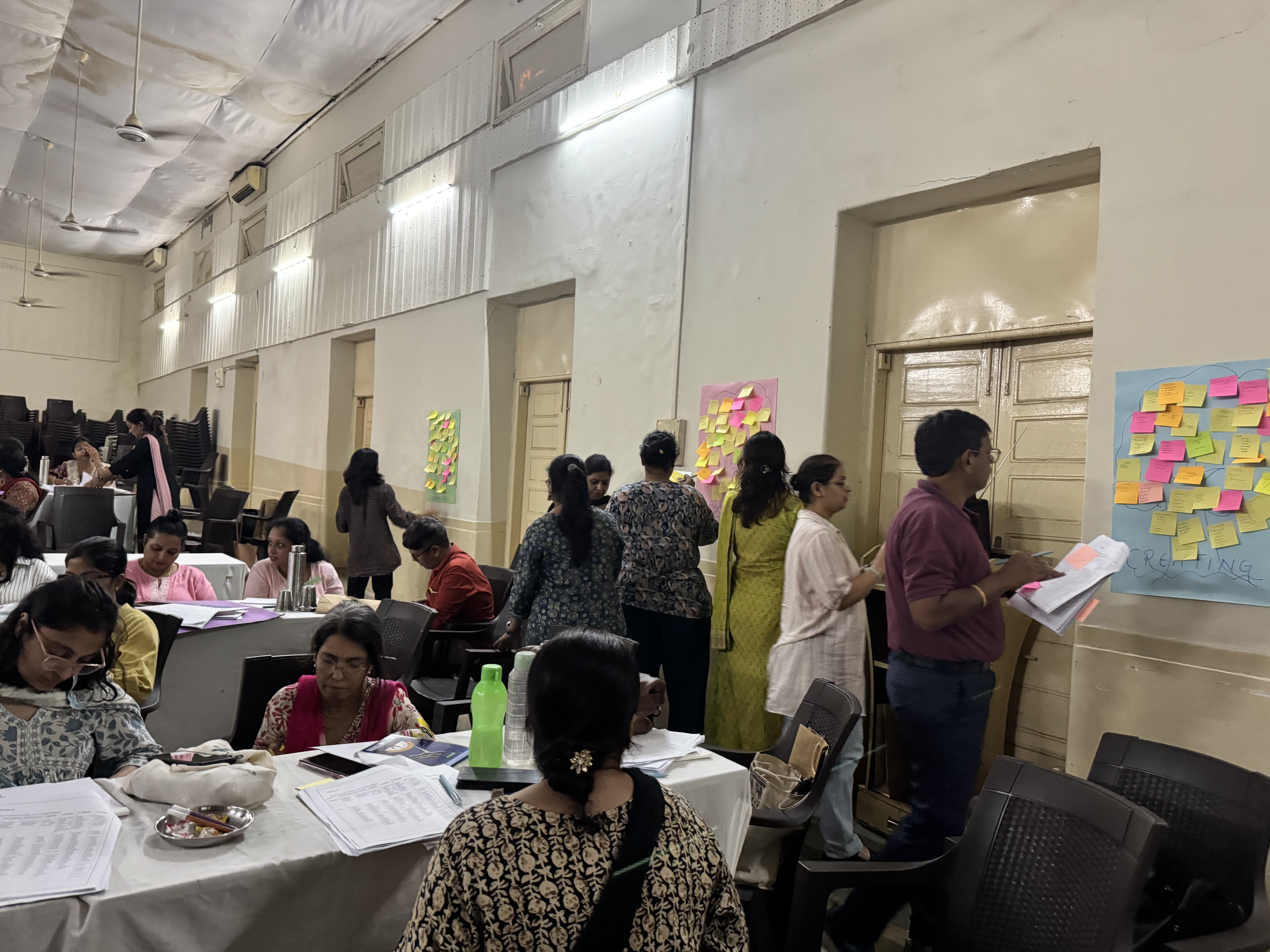
The session introduced core theories, including Kolb's Learning Cycle (Concrete Experience, Reflective Observation, Abstract Conceptualization, Active Experimentation) and Bloom's Taxonomy. Participants learned to design lesson plans and questions that target different levels of cognitive skill, from remembering to creating. It was concluded that experiential learning should precede theoretical instruction to engage students and make content more meaningful.
The workshop concluded by distinguishing between assessment and examination. Examinations typically measure performance at a single point, while assessments provide continuous feedback to guide learning. The importance of designing effective rubrics—which are flexible and specific to each subject's learning objectives—was highlighted as a key tool for communicating expectations and evaluating complex learning outcomes fairly.