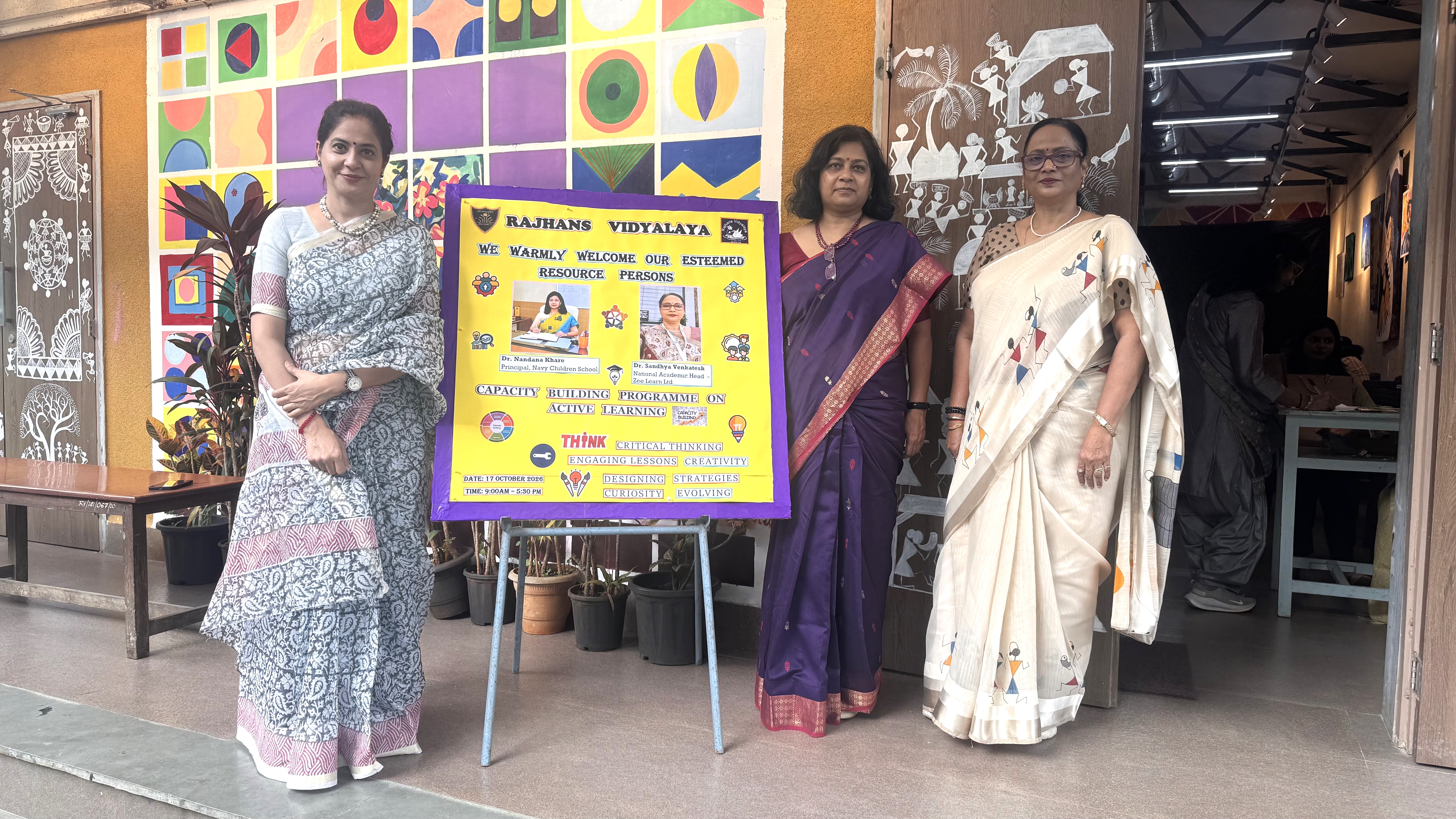
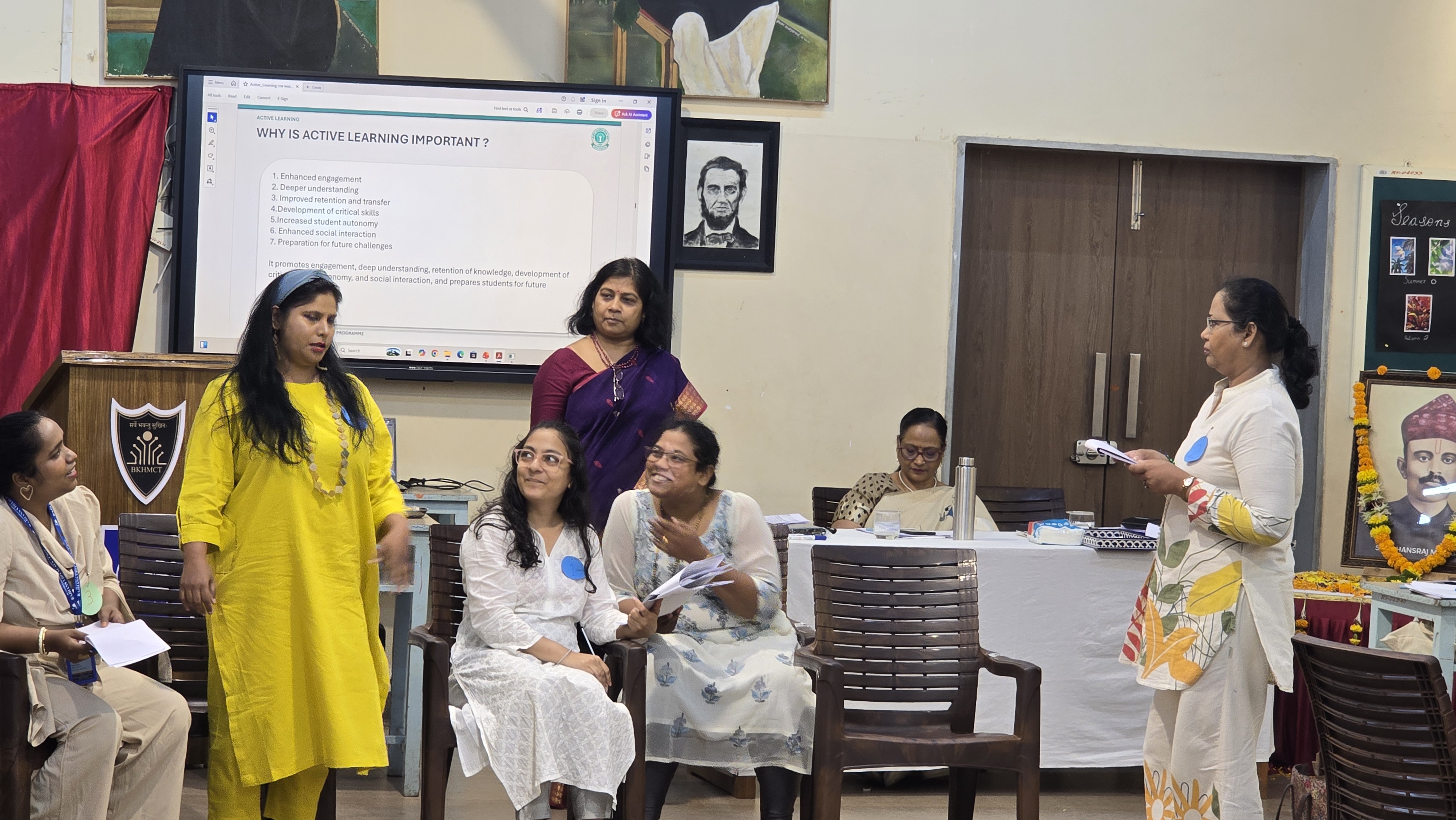
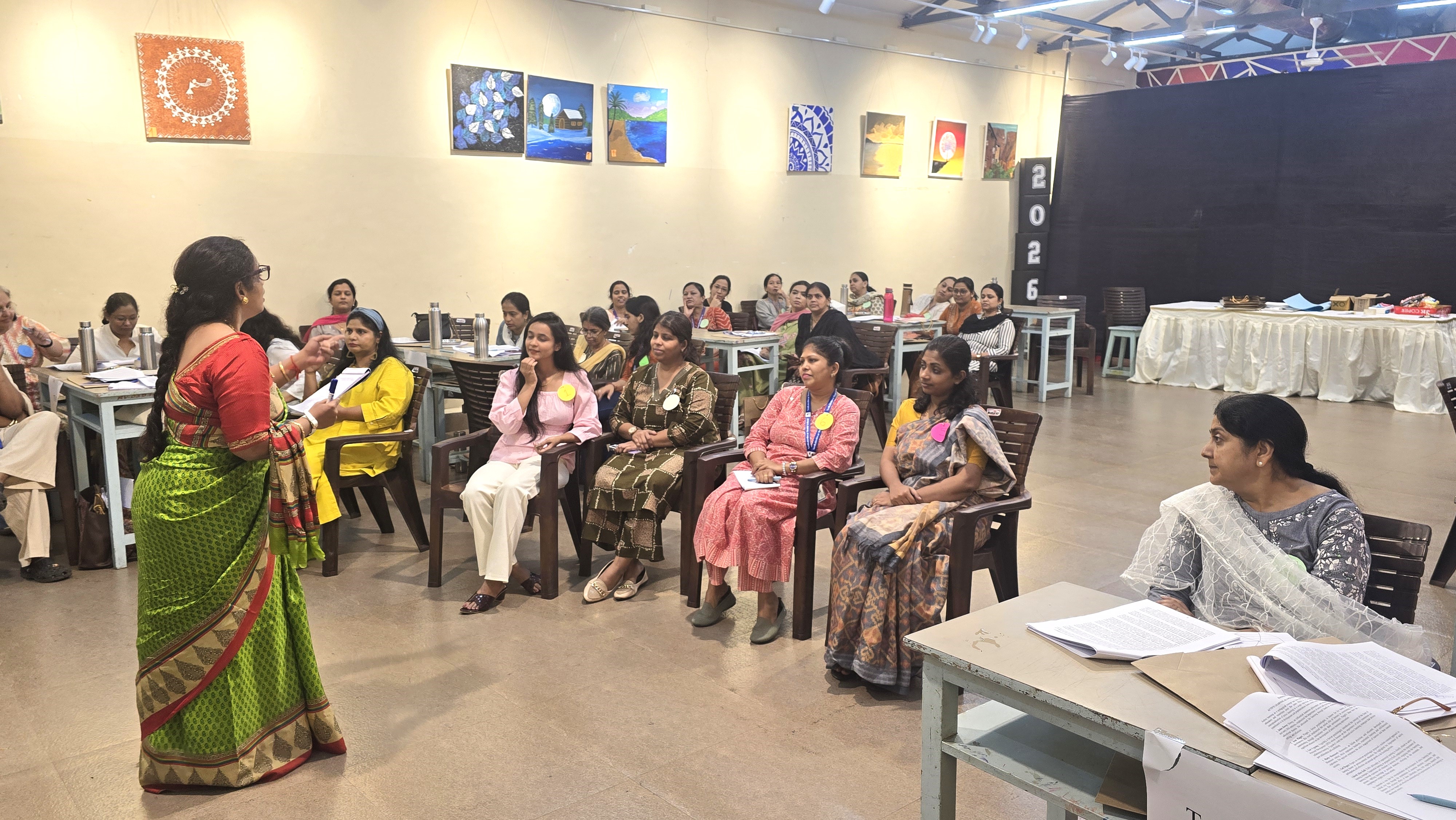
A Capacity Building Programme on Active Learning was organized at Rajhans Vidyalaya in the Art Room on 17 October 2026. Attended by teachers from Rajhans Vidyalaya and neighboring schools, the workshop featured two eminent resource persons, Dr. Sandhya Venkatesh and Dr. Nandana Khare, who shared their valuable insights on active learning strategies.
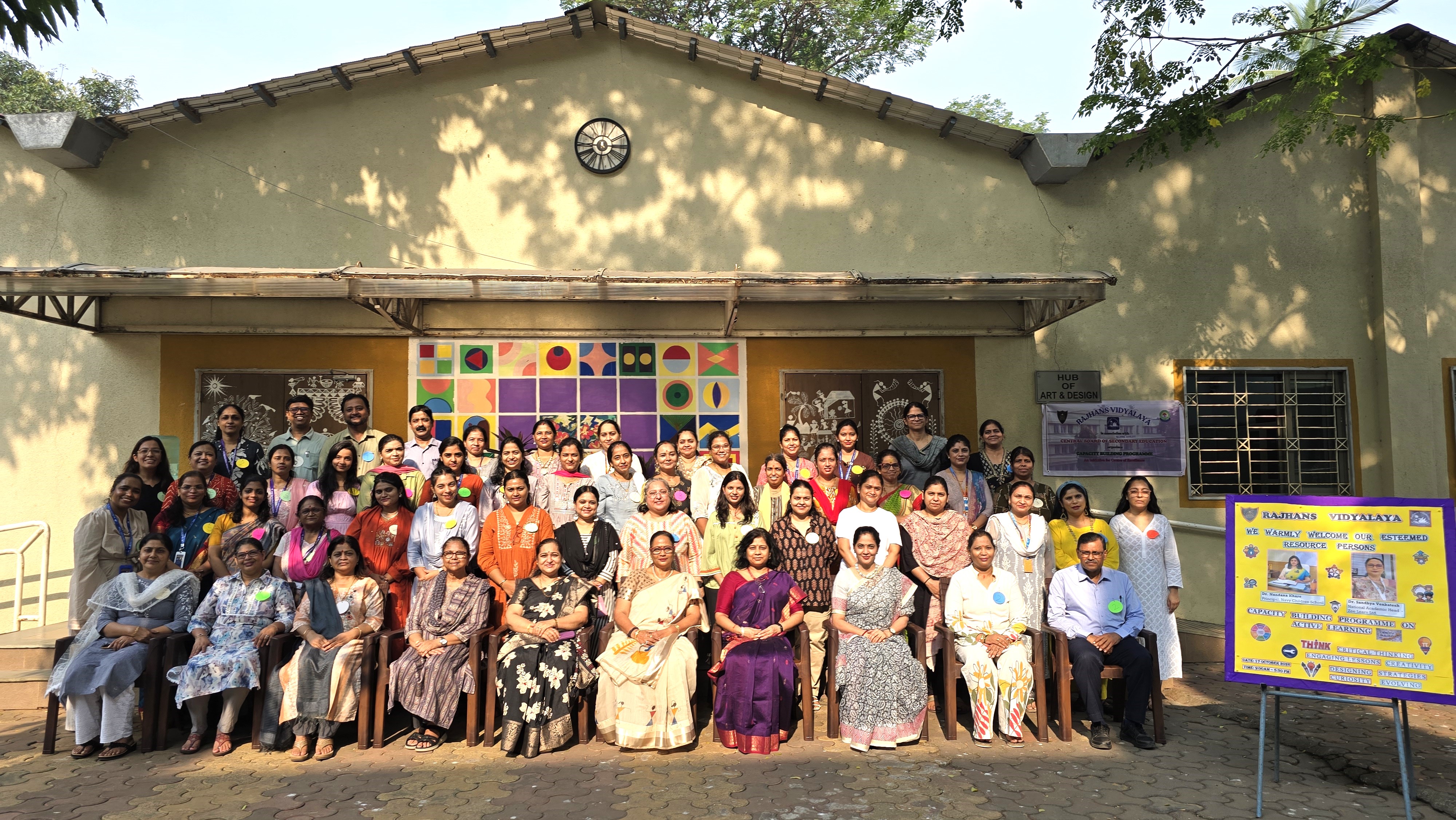
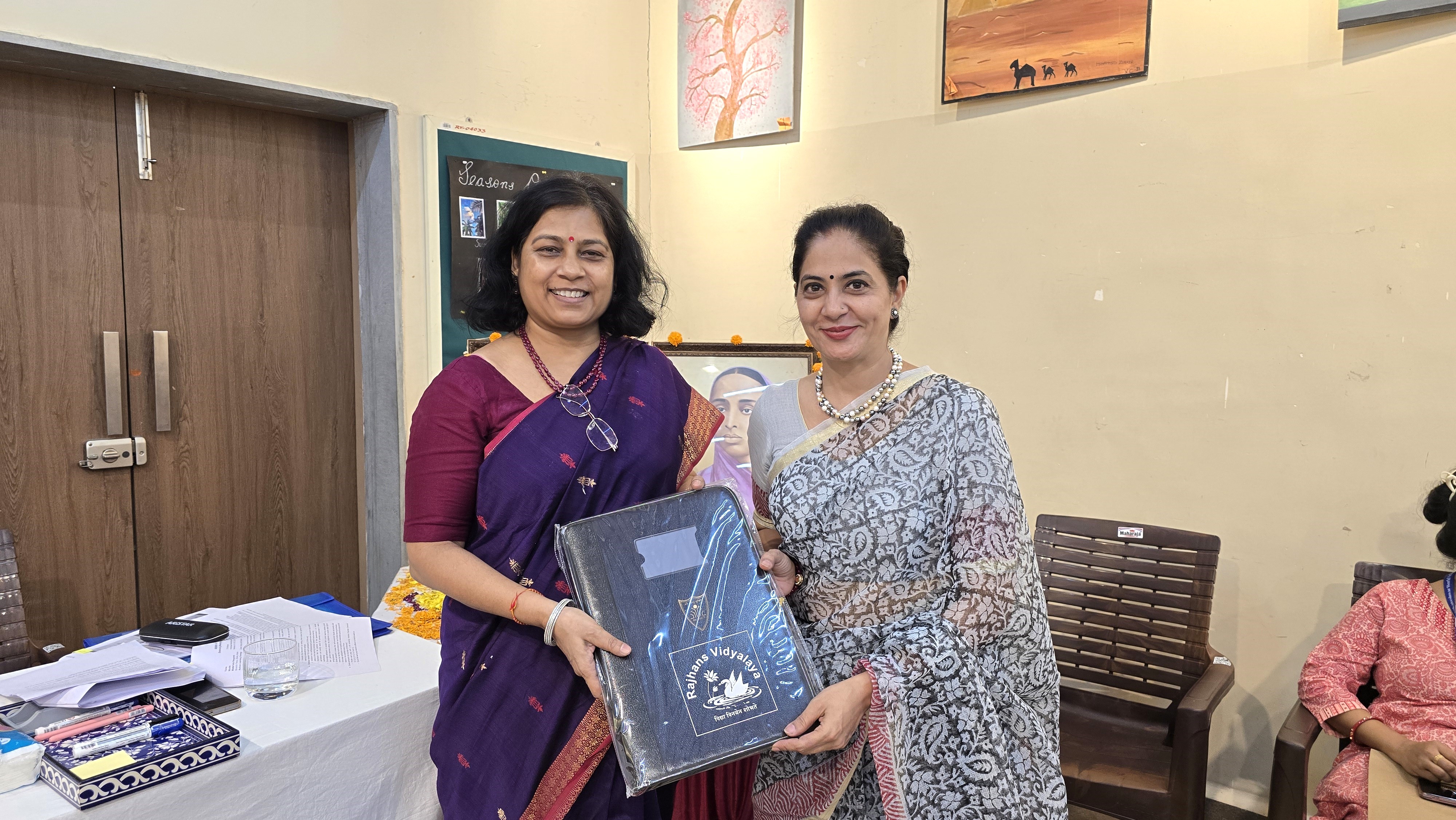
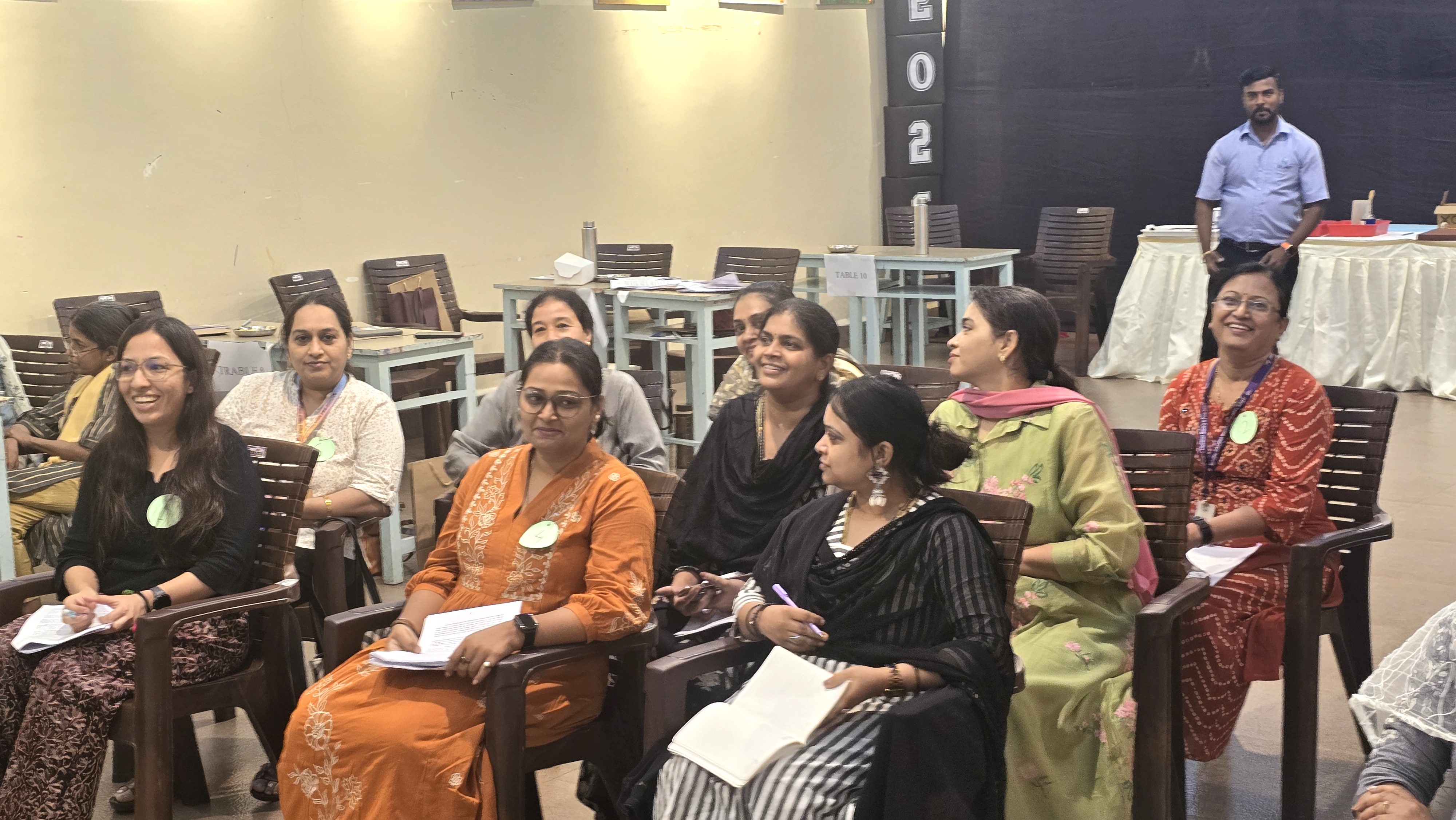
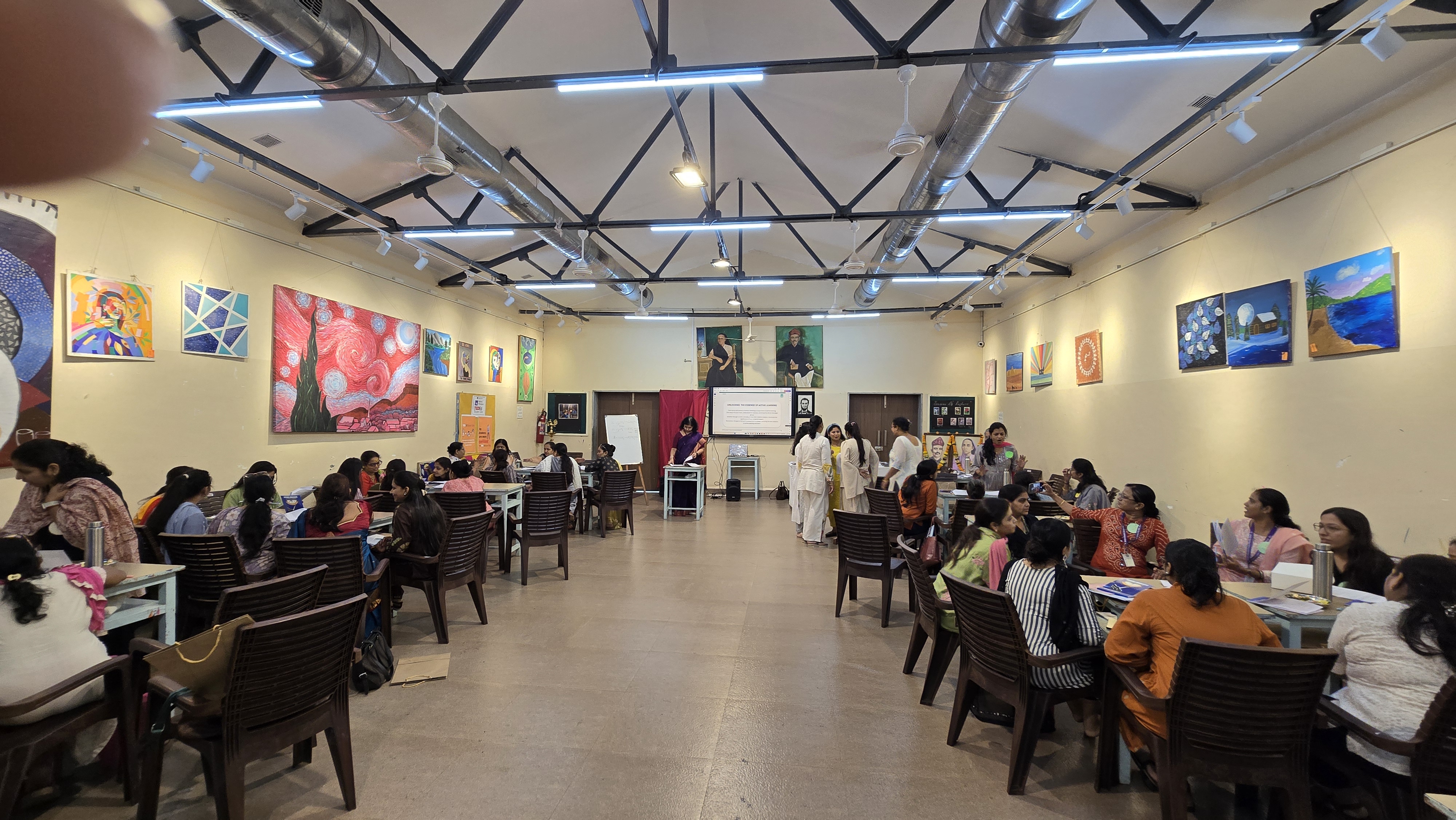
The programme commenced with participant registration, followed by a group photograph. Ms. Shruti anchored the opening session and introduced the resource persons. Respected Principal Ms. Ritu Dubey felicitated Dr. Nandana Khare, while Ms. Geetha Murudi felicitated Dr. Sandhya Venkatesh with tokens of appreciation. Teachers were then seated in collaborative groups to facilitate interaction, collaboration, and active participation throughout the training.
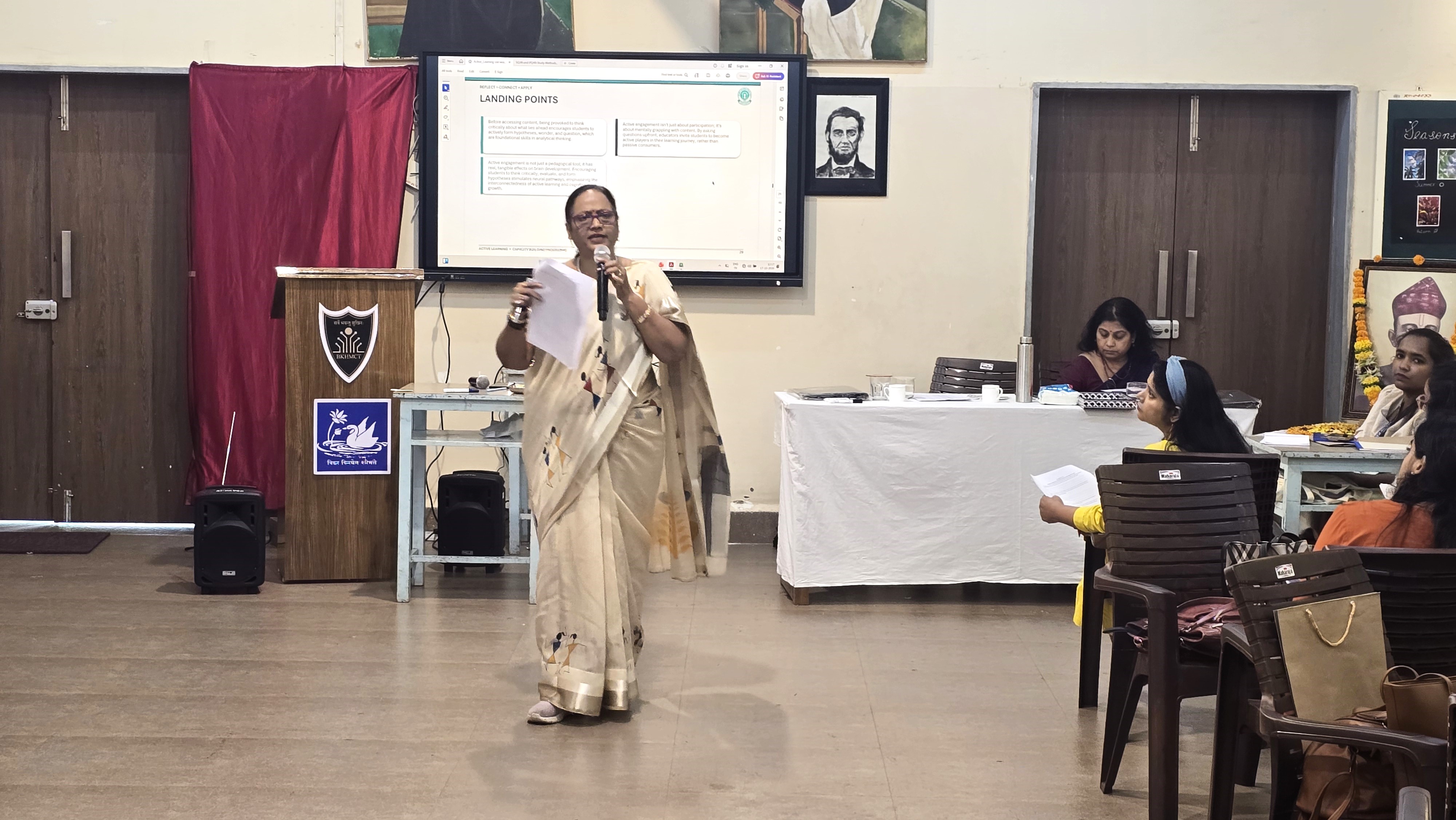
The opening session began with an ice-breaking Q&A activity to establish a welcoming learning environment. Participants then completed a paragraph-reading task, which led into a discussion on meaningful classroom engagement. The resource persons emphasized that teaching must transcend syllabus completion to focus on conceptual clarity, critical thinking, student participation, and practical application. The distinction between active and passive learning was discussed, highlighting the need to build interactive, inclusive, and student-centered classrooms where learners construct their own understanding.
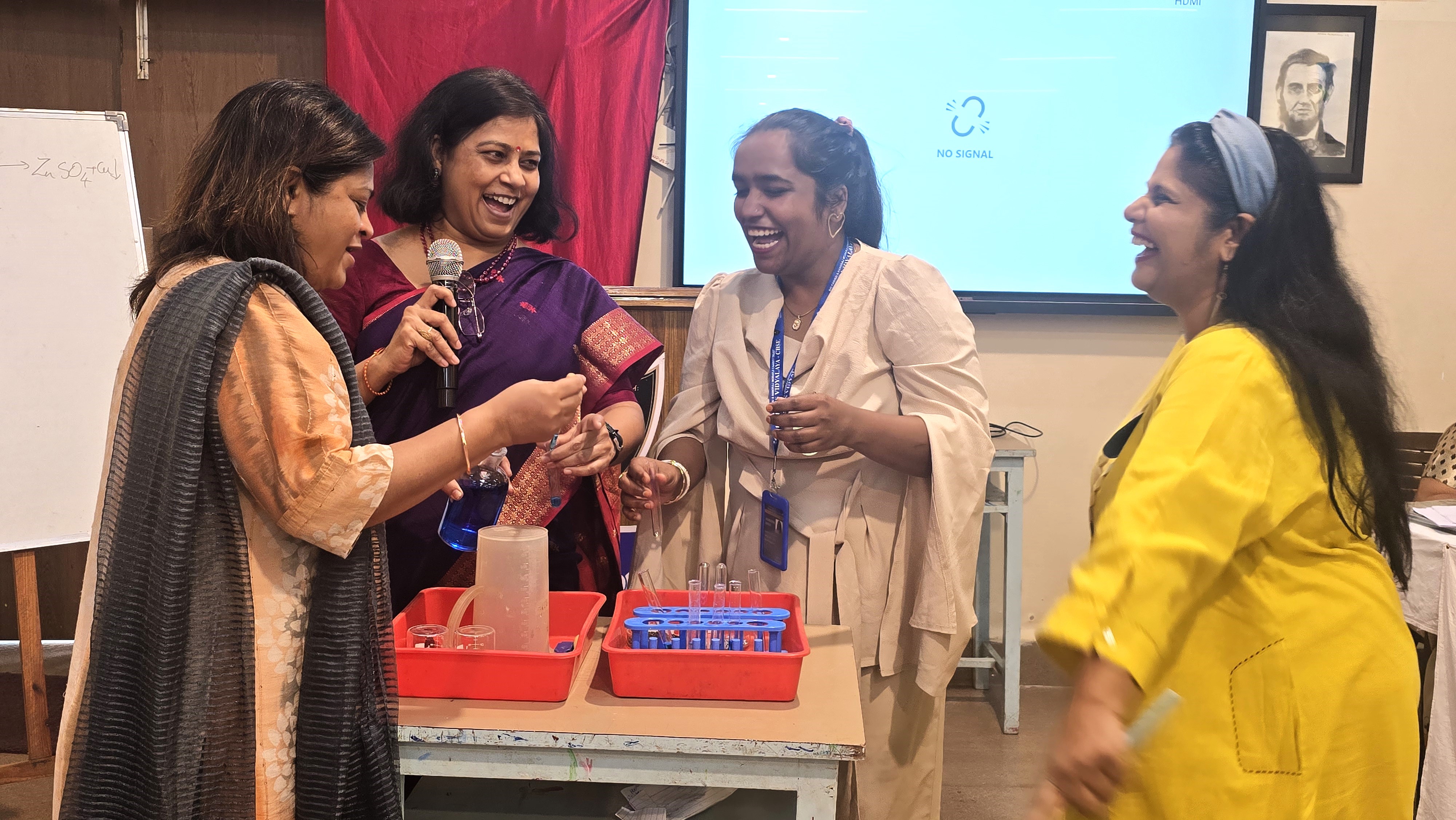
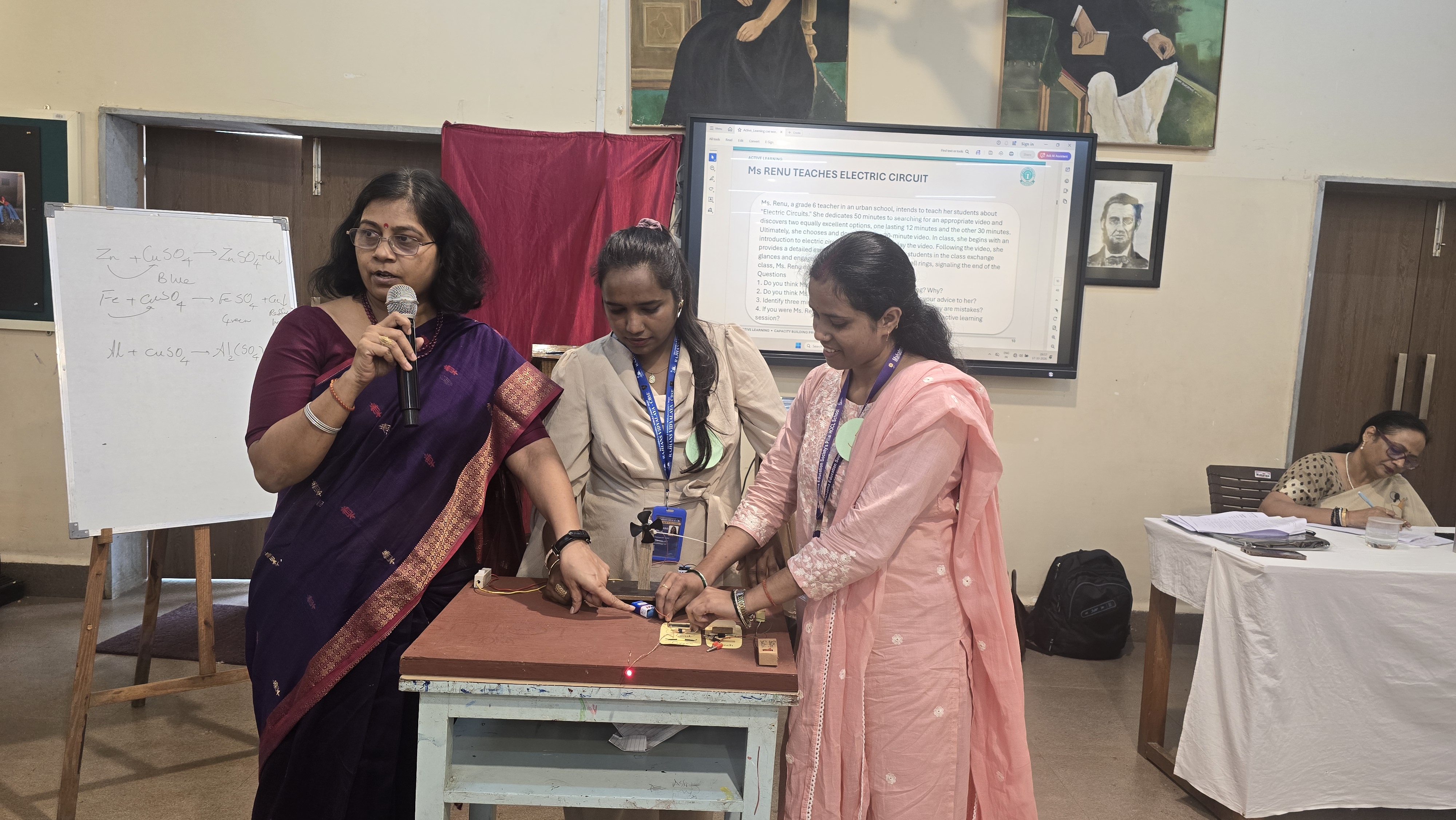
Following a short tea break, the workshop explored strategies to enhance student attention and understanding. A video presentation and a circuit-related demonstration illustrated the impact of activity-based learning. Addressing digital-era challenges such as excessive screen time, stress, and low setback tolerance, the resource persons highlighted the role of resilience alongside adequate sleep, proper nutrition, and balanced screen time in supporting student well-being and learning readiness.
The session examined the relationship between brain functioning and effective learning through the framework of Bloom’s Taxonomy, which organizes cognitive learning objectives from remembering to creating. The resource persons explained the functions of key brain regions during learning, including the neocortex for higher-order thinking, the hippocampus for memory consolidation, and the amygdala for emotional processing. The discussion highlighted how active learning techniques such as questioning, retrieval practice, and experimentation engage these multiple cognitive processes to improve retention.
To operationalize these cognitive processes, practical tools were introduced. The SQ3R and PQ4R study methods were presented as structured approaches to improve reading comprehension and independent learning. During a group activity, teachers discussed using open-ended questions and real-life examples to encourage critical analysis. Emphasis was also placed on communicating constructive feedback politely and positively to build student confidence and promote a supportive classroom environment.
After the lunch break, the workshop focused on designing outcome-aligned active learning plans. The resource persons explained that learning experiences should align with specific learning objectives to create inclusive, future-focused classrooms. Teachers received handouts detailing key twenty-first-century skills, including critical thinking, communication, collaboration, creativity, information literacy, adaptability, initiative, leadership, and interpersonal skills.
During a skill-mapping activity, participants worked collaboratively to analyze how these competencies interconnect. For instance, group problem-solving simultaneously fosters critical thinking, communication, and teamwork, while project presentations build initiative, leadership, and information literacy. The activity helped teachers understand that these skills can be integrated directly into subject teaching rather than treated as separate outcomes.
Teachers were subsequently divided into subject-wise groups to design lesson plans around assigned topics and specific twenty-first-century skills. The educators explored suitable classroom activities and instructional strategies, focusing on linking the selected skills with subject content and intended learning outcomes.
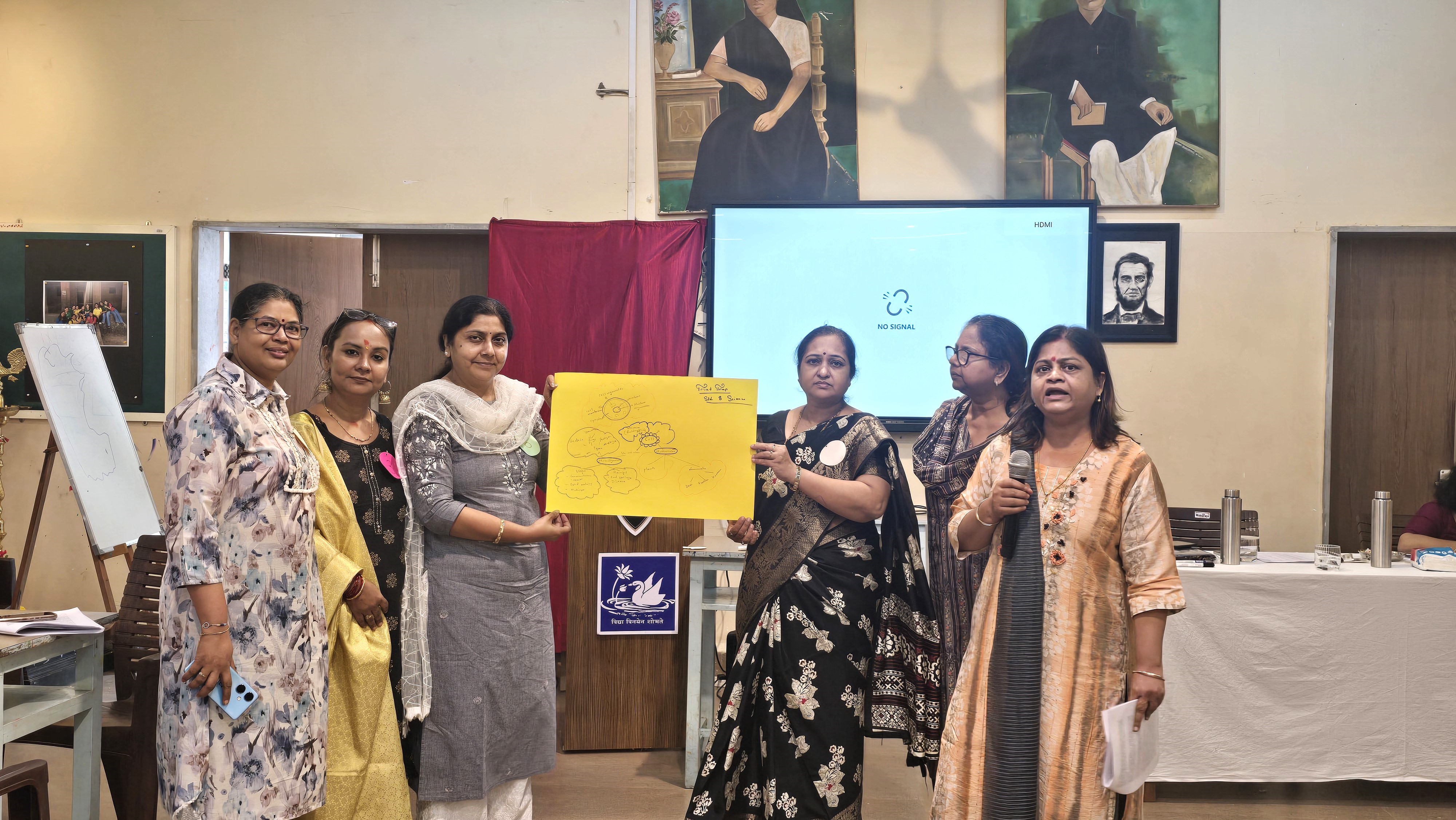
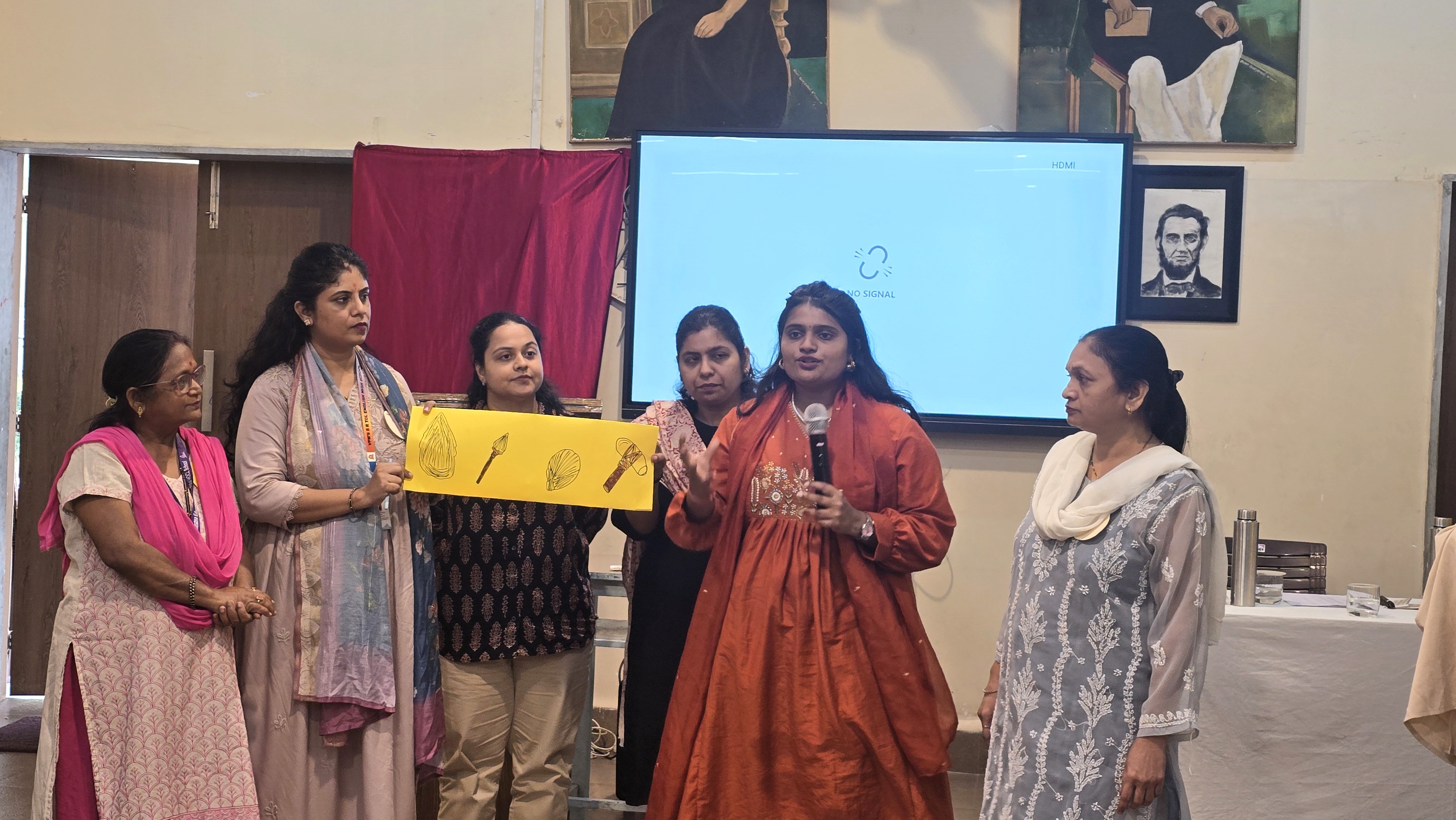
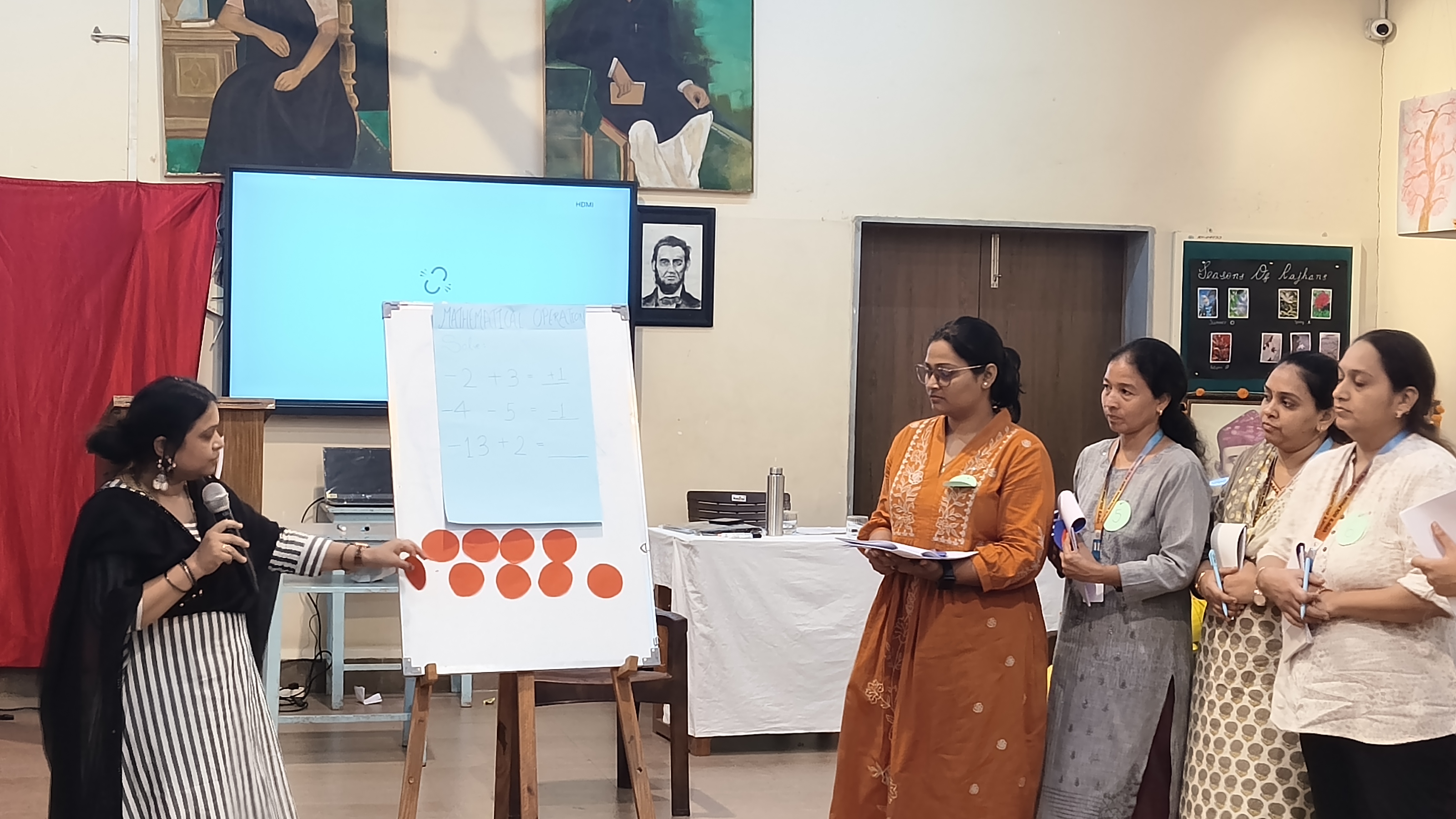
During the final practical session, each subject group demonstrated a lesson plan incorporating active learning strategies. The presentations showcased ways to encourage student questioning, exploration, and real-world application. Constructive peer feedback was shared to help teachers reflect on their planning, reinforcing that active learning should be a continuous teaching practice rather than an occasional activity.
Ms. Mihika proposed the vote of thanks, expressing sincere gratitude to Dr. Sandhya Venkatesh, Dr. Nandana Khare, the school management, and all participating teachers for their active engagement. She highlighted that the shared strategies would help create more engaging and student-centered classrooms, encouraging everyone to implement their key learnings in everyday teaching.
Overall, the programme was informative, interactive, and enriching. It equipped educators with practical insights into the neuroscience of learning, structured study methods, and experiential lesson planning, reinforcing that effective teaching extends beyond content delivery to foster holistic student development.