
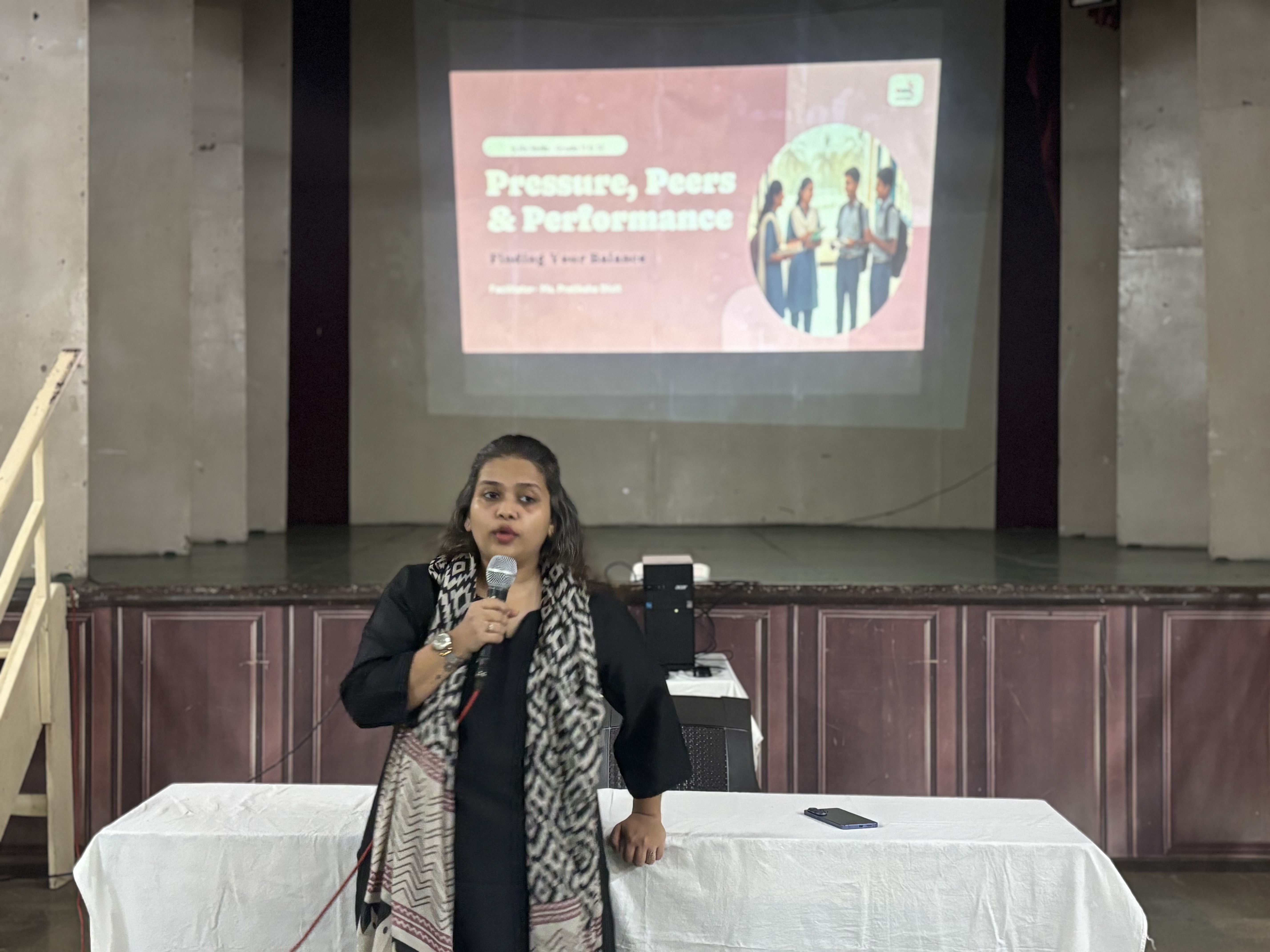
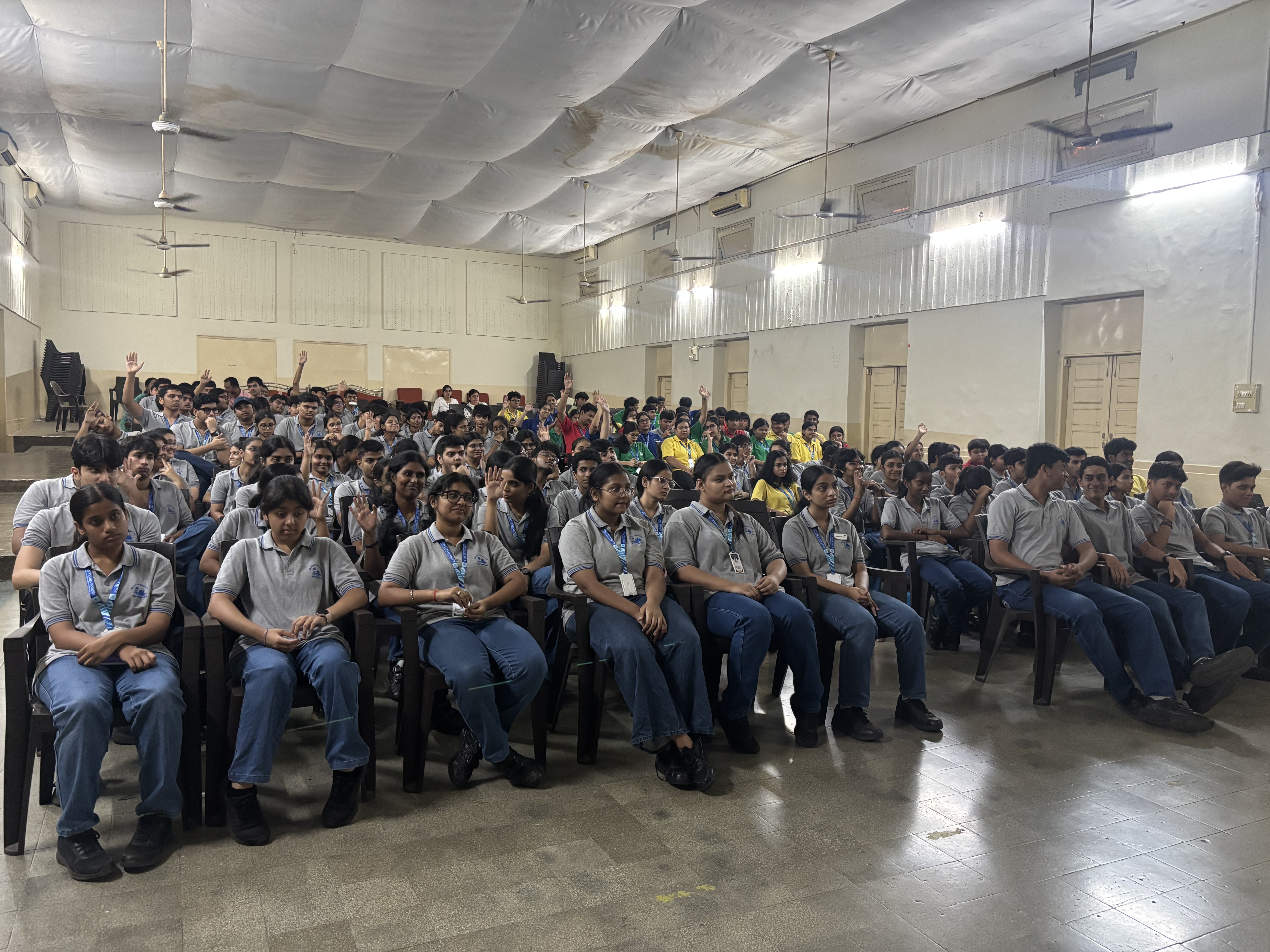
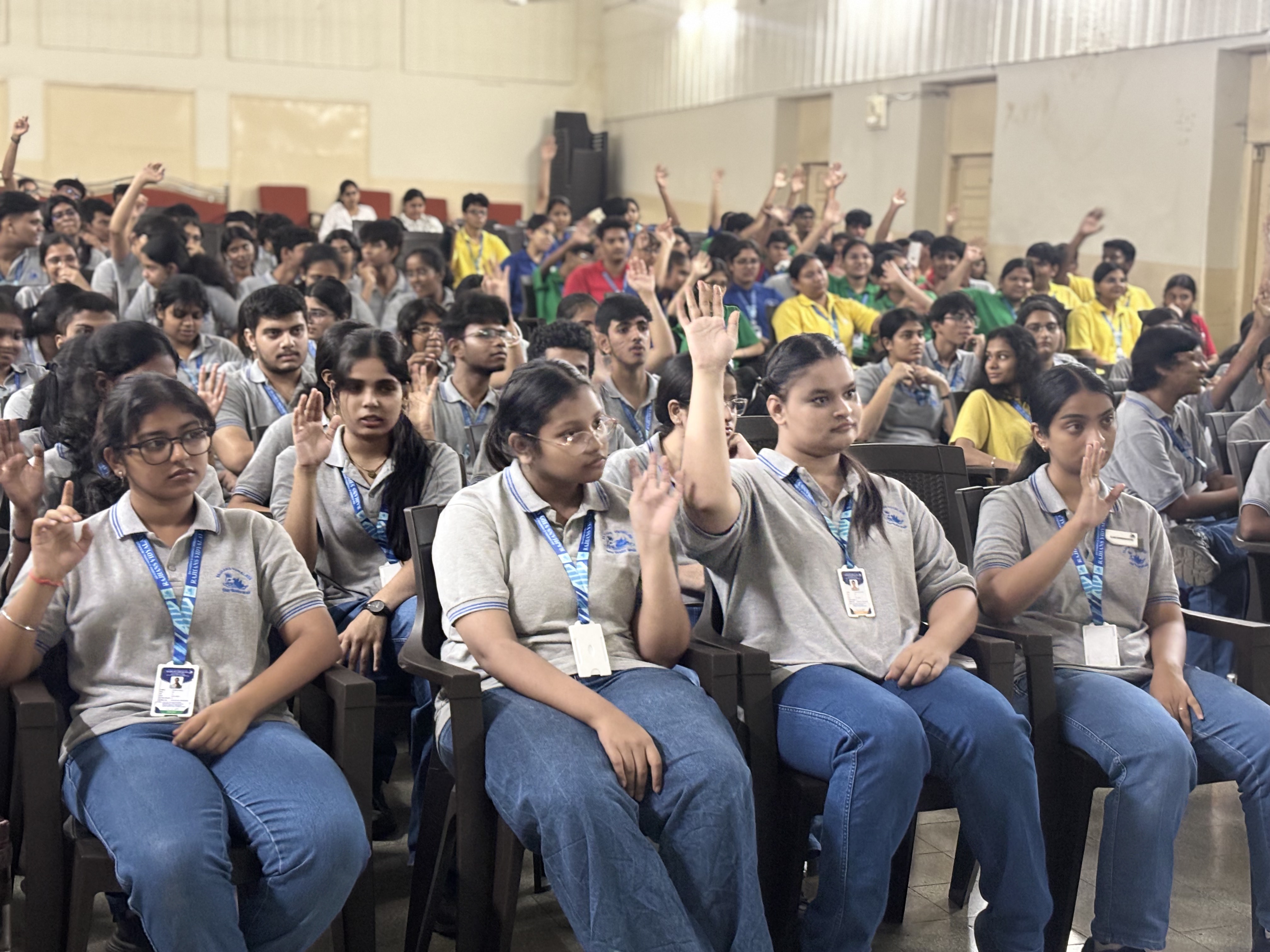
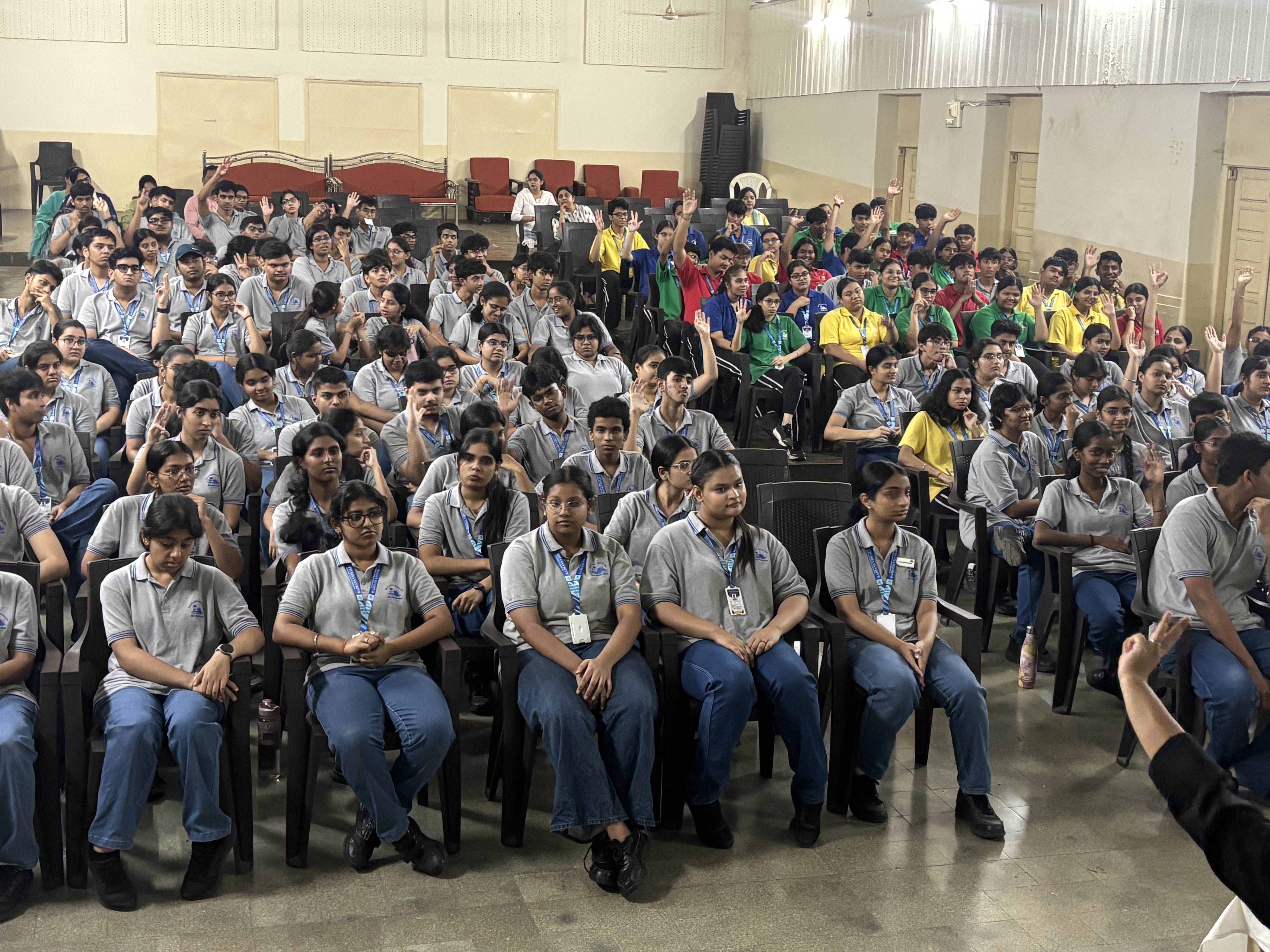
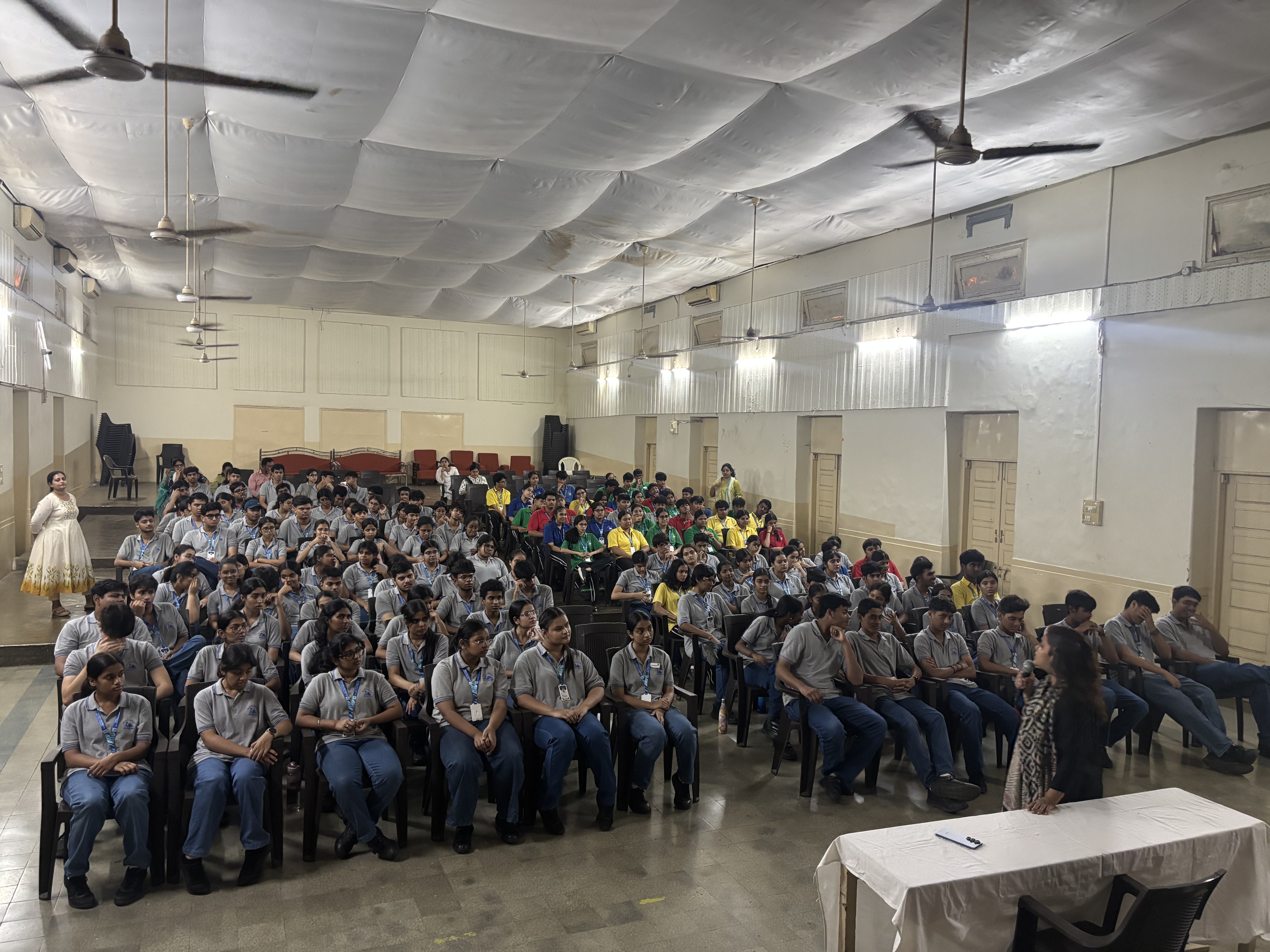
On 2 November 2026, a comprehensive student well-being workshop was conducted by Ms. Pratiksha Dixit with the support of Ms. Nidhi for the students of Grade XI & XII. The session was designed to sensitise students to common academic and peer-related pressures, equipping them with practical strategies to manage exam stress, procrastination, peer pressure, group dynamics, and challenging social situations. Through targeted discussions and activities, the initiative aimed to foster responsible decision-making, healthy personal boundaries, supportive peer behavior, and appropriate help-seeking habits.
To deliver these concepts effectively, the facilitators utilised a varied mix of instructional aids and interactive tools. The session relied on a structured PowerPoint presentation, interactive case-based scenarios, student reflection prompts, and guided discussion questions with response options. Additionally, an audio-visual resource centered on safely assisting others was screened to provide clear, practical guidance on peer support.
The workshop commenced with an open dialogue on academic pressure and exam anxiety, helping students pinpoint their specific stress triggers. To navigate these high-pressure moments, facilitators introduced the "Pause–Prioritise–Plan–Proceed" approach as a step-by-step strategy for regaining emotional balance and organizing workloads. The session then addressed procrastination, dissecting common triggers such as perfectionism, fear of failure, feeling overwhelmed, and digital distractions. Students learned the "10-Minute Start/Reset" technique, which encourages identifying entry barriers, breaking tasks into smaller components, and setting a specific start time to build momentum.
Moving into interpersonal relationships, the facilitators led a discussion on peer pressure, group dynamics, and gossip, addressing real-world issues such as rumours, social exclusion, side-taking, and the sharing of private screenshots. Students were prompted to evaluate whether their choices aligned with their personal values or stemmed from a urge to fit in with peers. To promote a safer school culture, the "Bystander to Upstander" segment introduced the 5 Ds framework—Direct, Distract, Delegate, Delay, and Document—offering actionable, safe methods to intervene when observing exclusion or harassment, while reinforcing the need to seek adult assistance when necessary.
Practical application formed a central component of the workshop through the "What Would You Do?" Case File Challenge. Working through realistic scenarios, students analyzed problem situations, evaluated options, weighed consequences, and formulated safe interventions, including ways to support a classmate experiencing academic strain without adding to their burden. Following the video screening on safe peer assistance, a guided reflection emphasized listening without judgement, respecting personal boundaries, offering constructive support, and knowing when to involve authority figures.
The workshop concluded with the "My Balance, My Choices" self-reflection activity, where students created personal action plans. Each participant identified one pressure to manage more effectively, one peer boundary to maintain, one upstander response to deploy if someone is targeted, and one concrete wellness action to execute during the week. Throughout the session, student participation was high, with participants actively contributing to discussions, demonstrating clear problem-solving skills, and showing a strong commitment to empathetic peer relationships.